In July 2026, the median home sale price in the City of Toronto was $800,000 – a 4.2% month-over-month decrease. Year-over-year, the market is down 5.9%. That’s a meaningful shift, and if you are buying a home in Toronto, it means more room to negotiate than you would have had in previous cycles.
Where you land in this city comes down to three things: housing type, price point, and how long you’re willing to sit in traffic. Victorian rowhouses in older districts look nothing like the glass towers along the lake, and the numbers behind them don’t either.
How Toronto is Organised
Toronto is less one city than a collection of smaller communities stitched together, each with its own housing stock and price reality. The broader Greater Toronto Area – the GTA – wraps around the city proper and pulls in surrounding municipalities, where the median home price sits slightly higher at $860,000.
Looking past general boundaries and getting into specific property data is where a search actually starts to make sense. Lot sizes, building ages, transit proximity – those details tell you far more than a neighbourhood name ever will.
Boroughs and the Greater Toronto Area (GTA)
The City of Toronto is made up of former municipalities: Old Toronto, North York, Scarborough, Etobicoke, East York, and York. Each carries its own residential zoning mix – dense urban blocks in some, suburban subdivisions in others.
Expand the search to the full GTA and you open up considerably more detached inventory. Monthly sales figures and new listing counts for these regions are published in the official TRREB Market Watch report, which is worth bookmarking early.
Using This Guide for Your Search
This guide sticks to physical real estate and factual market data. The right area for you is the one that fits your budget, your preferred property type, and your commute – not a lifestyle label someone else assigned to it.
Look at median prices and housing inventory within a specific postal code. That’s the most grounded way to run this search.
Mapping the City’s Regions
The downtown core anchors everything, with residential density thinning out as you move north, east, and west. Understanding that basic layout tells you a lot about where your budget goes further – and where it doesn’t.
An interactive map is genuinely useful here. You can plot transit lines, see where historic districts give way to newer builds, and identify exactly where certain home types cluster before you ever walk through a door.
Interactive Search Tools
A good interactive map lets you drill down to property lines and local amenities rather than just staring at neighbourhood outlines. Most overlay transit stops and major highways, so you can get a realistic read on daily travel before you fall for a listing.
Many local brokerages offer digital search tools that filter active listings by property type and price range, which makes tracking available inventory in specific pockets of the city considerably easier.
Downtown, North, East, and West
Downtown Toronto is condo and attached townhome territory. You’ll get smaller square footage, but you’ll be close to commercial centres and transit.
Head north, east, or west and the picture changes – more detached single-family homes, larger lots, a mix of mid-century builds and newer infill. The trade-off is commute time and, in some pockets, price.
Toronto Housing Types and Price Points
The City of Toronto average price sits around $1,010,836, which means your expectations need to be calibrated to the specific districts you’re touring – not to a city-wide figure that blends a lot of very different markets together.
An attached home and a detached home in the same postal code can carry dramatically different price tags. Getting clear on which structure type fits your budget is the first cut to make before you start shortlisting neighbourhoods.
Detached Single-Family Homes
Detached homes carry the highest premiums in Toronto, and that’s mostly a land story. Private driveways, larger backyards, more total square footage – but available land is scarce, and a lot of older detached stock is being renovated or replaced. Factor potential renovation costs into your numbers when you’re looking at established single-family areas.
Condos, Townhomes, and Attached Units
Condos and townhomes get you into neighbourhoods where detached houses would blow the budget entirely. High-rise development is concentrated near Lake Ontario and the downtown core, and these units move at a range of price points.
The one thing buyers consistently underestimate: monthly maintenance fees. They’re real carrying costs, and they belong in your debt-to-income calculation before you make an offer – not after.
Historic Districts and New Construction
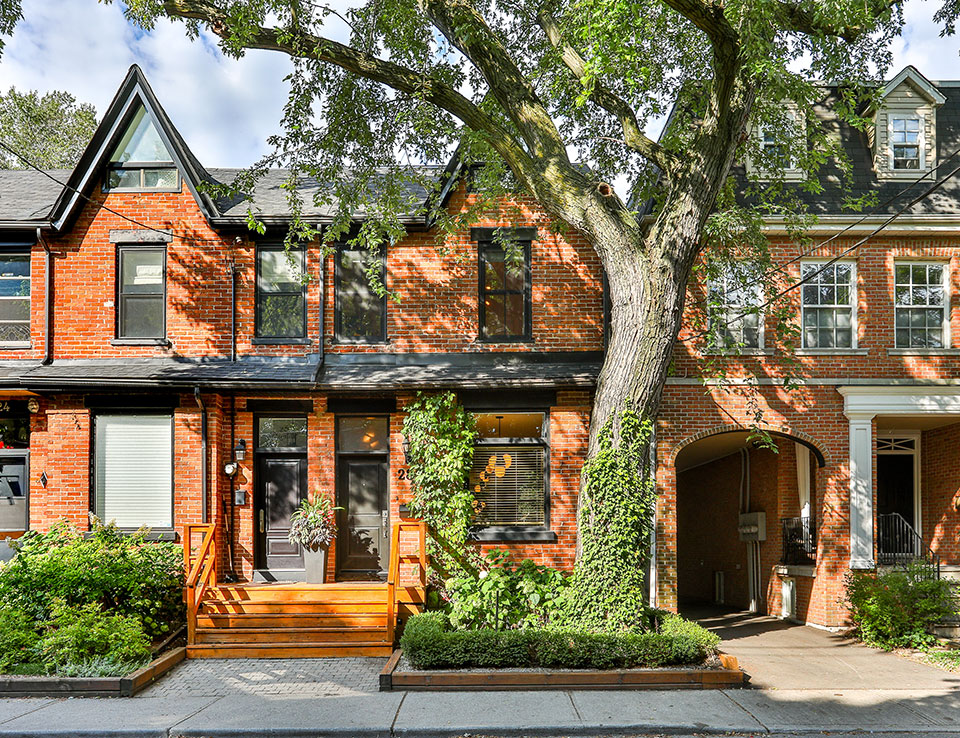
Toronto holds onto a fair amount of older architecture – Victorian and Edwardian designs with distinct brickwork, stained glass, and floor plans that predate open-concept everything. They have character, and they have quirks. Know what you’re getting into before you romanticise the original details.
Master-planned communities are the other end of the spectrum: modern layouts, energy-efficient systems, brand-new infrastructure. If that’s your direction, local builder registries let you track active construction phases and upcoming releases.
Neighbourhood Profiles: Real Estate Snapshots
The city-wide MLS HPI benchmark is $928,200, but individual communities can land well above or below that number. Looking at specific neighbourhoods is the only way to understand what a given budget actually gets you.
Property ages, lot dimensions, building styles – these shift considerably from one district to the next. Breaking the data down by area sets accurate expectations before you start booking showings.
The Annex
The Annex has a median home price of roughly $1.8 million, with average unit sizes hovering around 2,000 square feet. The housing stock runs predominantly to Victorian and Edwardian detached and semi-detached houses, alongside modern condominiums.
The spread within that median is wide. Detached properties typically range from $2 million to over $4 million. Semi-detached homes sit between $1.5 million and $2.4 million. Condos come in from approximately $550,000 to $1.2 million – which is where first-time buyers tend to start looking in this particular area.
Lake Ontario Waterfront
Waterfront neighbourhoods bordering Lake Ontario are defined almost entirely by vertical density. Condominium towers make up the vast majority of residential space here, with unobstructed water views and direct access to the waterfront trail system.
Prices shift based on floor height, square footage, and which direction the unit faces. Before you get attached to a suite, verify building amenities and parking availability – both have a direct impact on resale value.
Commuting and Highway Proximity
Distance to Highway 401, the Gardiner Expressway, or the downtown core dictates daily commute times for most people in this city. Properties within a short drive of those arteries tend to hold sustained buyer demand for that reason.
Map your actual route to work during rush hour before you commit to a location. It’s a simple step and it saves an enormous amount of regret.
Toronto Real Estate Prices and Local Data
Property taxes, utility rates, and ongoing maintenance costs sit on top of whatever you pay for the home itself. Accurate data is the only way to assess what a neighbourhood actually costs to live in.
Official municipal databases give you a transparent picture of what a specific address entails. Verified statistics on pricing, public services, and school boundaries keep you from building a budget on assumptions.
Current Home Values and Trends
As of July 2026, the City of Toronto’s median sale price is $800,000 – down 5.9% from the same time last year. The wider GTA holds a higher median at $860,000.
TRREB’s official Market Watch report publishes monthly updates on sales and average selling prices across these regions. If you’re actively searching, check it regularly.
Researching Crime and School Boundaries
For safety data, the Toronto Police Service maintains an official Maps page with six interactive maps, including neighbourhood crime maps and a Major Crime Indicators dashboard. It’s a public resource and worth using directly rather than relying on second-hand summaries.
School zoning in Toronto is split between the Toronto District School Board (TDSB) and the Toronto Catholic District School Board (TCDSB). The TDSB offers an official School Boundary locator tool on its website – enter a specific street address and it tells you the catchment schools. Use that tool. Don’t guess based on neighbourhood name.
Buying a Property in the City
Inventory moves at different speeds depending on price bracket and property type. Getting from research mode to active house hunting means having financing approval in place and a clear sense of which districts you’re targeting.
Daily listing monitoring matters here, and so does understanding local zoning bylaws. When a property that fits your criteria hits the MLS, you need to be ready to move.
Renting vs. Buying
Renting first gives you a chance to test a neighbourhood’s commute and daily logistics before you commit to a mortgage. It’s a reasonable approach if you’re not certain yet whether a downtown high-rise or a suburban detached home is the right fit.
Buying builds long-term equity, but it requires a substantial down payment and closing costs up front. Compare current rental rates against the carrying costs of a mortgage at today’s interest rates – then make the call.
Working With a Local Agent
A local agent pulls historical sale prices and neighbourhood-specific trend data that you won’t easily find on your own. Comparable sales keep you from overpaying.
They also handle contract negotiations and coordinate with home inspectors and real estate lawyers. That professional layer protects your deposit and simplifies the closing process considerably.
Frequently Asked Questions
Where are the more affordable neighbourhoods in Toronto for first-time buyers?
It depends on the property type you’re targeting. The city’s median home price is $800,000, but first-time buyers can find lower entry points by looking at condos – which start around $550,000 in areas like The Annex.
Which Toronto, Canada neighbourhoods offer access to local school districts?
School access is determined by geographic boundaries, not neighbourhood names. Use the Toronto District School Board’s official School Boundary locator tool to verify which schools correspond to a specific address before you make any assumptions.
Toronto East End vs. West End: Which areas are better for buying a property?
It depends on your housing preference and budget. Both ends of the city offer distinct housing stocks, and you can compare current inventory levels and median prices using the monthly TRREB Market Watch report.
Which Toronto neighbourhoods offer TTC subway access for commuting downtown?
Many central areas have solid subway access for daily commuters. The Annex, for example, sits close to the downtown core and gives residents short transit commutes alongside its mix of Victorian homes and modern condos.
Which Toronto neighbourhoods have heavy condo construction?
Condominium development is concentrated near the Lake Ontario waterfront and the immediate downtown core. You can track new construction listings and average selling prices for these units through the TRREB Market Watch page.
How can buyers track neighbourhood return on investment?
TRREB’s Market Watch report publishes monthly GTA housing data, breaking down sales and average selling prices across the region. That’s your most reliable tool for monitoring long-term price trends in specific areas.