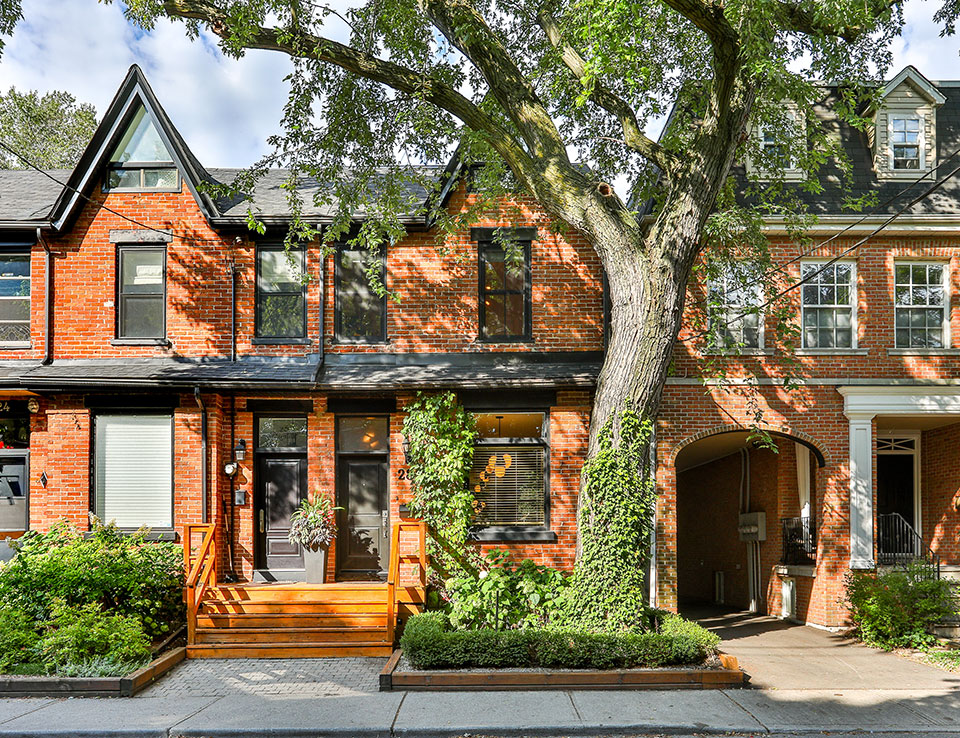
You do not pay capital gains tax when selling your Toronto principal residence, but investment or secondary properties are subject to taxation.
When selling real estate in Toronto, tax treatment depends on whether the property is your principal residence or an investment property. Understanding this distinction is critical for accurate financial planning.
Principal Residence Exemption
- No Tax on Primary Homes: If the property you are selling has been your principal residence for every year you owned it, the sale is exempt from capital gains tax under the Canada Revenue Agency (CRA) principal residence exemption.
- What Counts as a Principal Residence: It must be the home you regularly live in, whether that is a detached house in the east end, a Leslieville semi, or a downtown condo averaging around $700,000 (TRREB, 2025). Cottages and seasonal homes may also qualify if they are designated as your principal residence for specific years.
- Reporting Still Required: Since 2016, all sellers of their principal residence must report the sale on their income tax return, even if no tax is owed.
Investment & Secondary Properties
- Capital Gains Apply: If you are selling an investment property, rental property, or a secondary residence, you will pay capital gains tax on 50% of the profit. For example, if you sell a condo in King West for $800,000 after purchasing it for $600,000, the $200,000 gain is taxable on half ($100,000), added to your income for that year.
- Strategic Planning: Many Toronto investors hold multiple condos or income properties. Timing sales to align with income levels or spreading dispositions across tax years can help manage the tax burden more effectively. An accountant can guide you through optimization strategies.
Why This Matters For Toronto Sellers
TRREB data shows that detached homes in central Toronto often exceed $1.5 million, while investment condos are popular across the downtown core. Sellers who assume every property is exempt may face unexpected tax bills. The Fox Marin Real Estate Team works closely with accountants and mortgage brokers to help sellers prepare for the financial impact of a sale, ensuring there are no surprises at closing.
Key takeaway: Your primary home in Toronto is exempt from capital gains tax, but investment or secondary properties are not. Always confirm your tax obligations with an accountant before selling.
Did you find this useful?