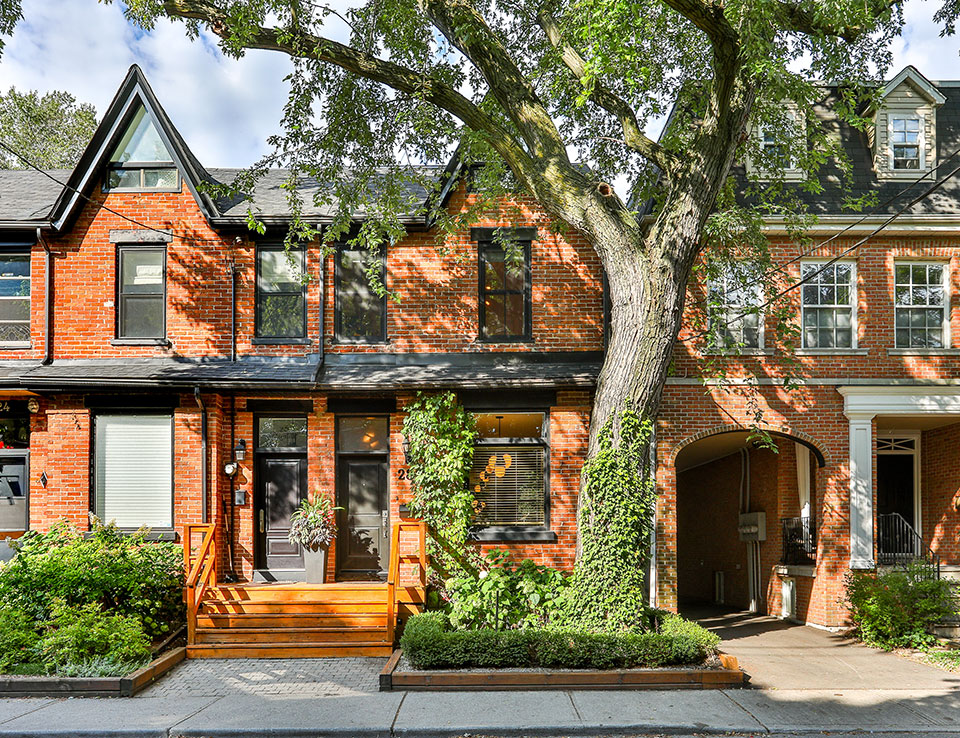
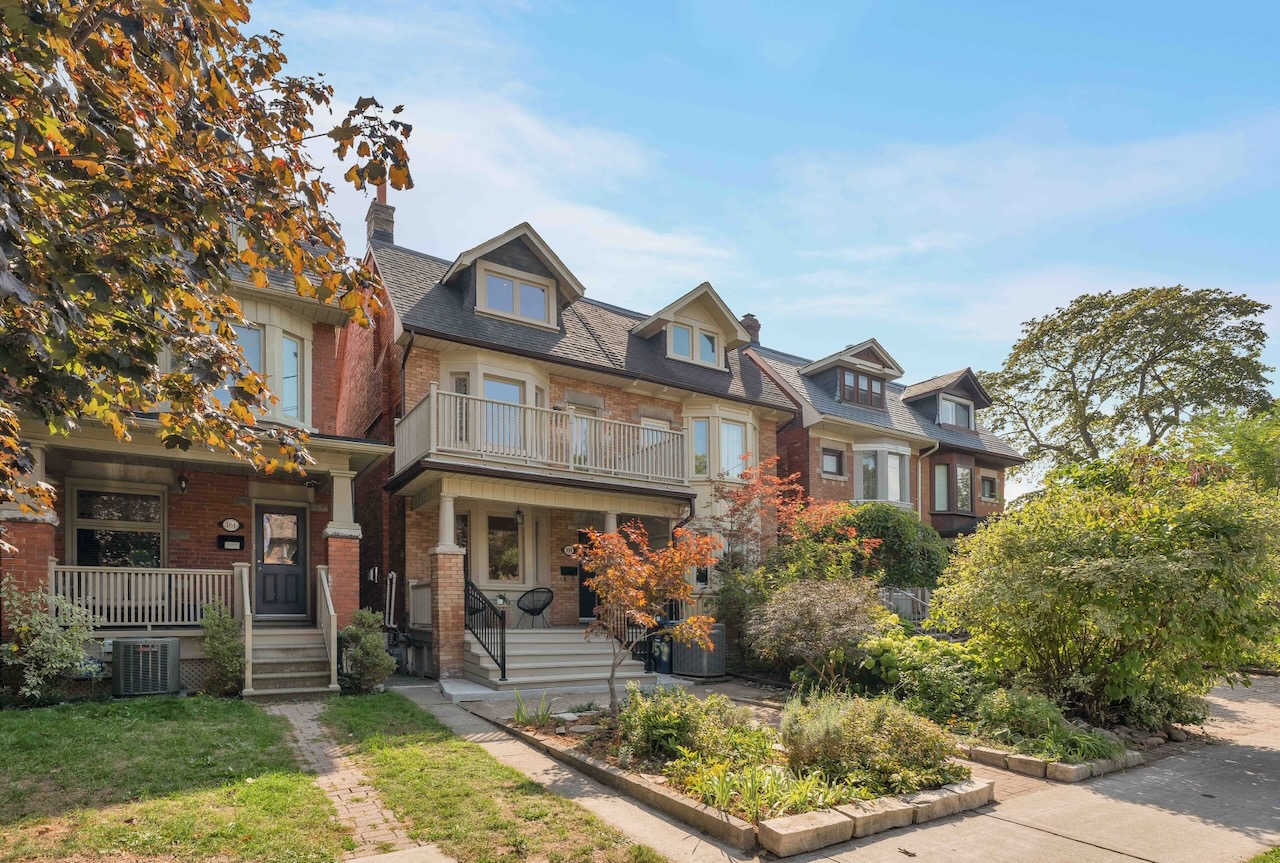
The final cast study is a freehold townhouse on Natalie Place in Leslieville, tucked near Logan and Queen East.
Key features:
- Freehold, so no maintenance fees
- Two plus one bedrooms
- Three washrooms
- Built in garage and parking
- Private terrace off the kitchen
- Brownstone like curb appeal in a tucked away, central pocket
This is the category that social media often swoons over. Townhouse, freehold, East End, move in ready, with room to personalize over time.
However, even apparent slam dunks are facing more scrutiny.
One issue that surfaced repeatedly was the terrace. It backed onto a commercial laneway with an attractive office building across from it. While there was a buffer, some buyers struggled with the lack of full privacy, even though the building was quiet on evenings and weekends.
The second issue was layout perception. Initially, the lower level was staged as a bedroom plus future washroom opportunity, in the spirit of a teen suite or guest space. Buyer feedback, however, centered on the main living level feeling tight for a large sofa and television set up.
In other words, they could not quiet “see” where their life would actually unfold.
So staging was rethought and flipped:
- The lower level was restyled as a generous recreation room
- A large sofa, proper TV zone and cozy layout highlighted the ceiling height and natural light
- The main level could now be mentally freed up as a more flexible, multi use space
This seemingly simple change unlocked buyer imagination.
The numbers:
- Original list price: $1.32M
- Relist price: $1.298M
- Final sale: just under $1.3M
- Time on market: 47 days
Again, in a hotter market, this home likely would have sold in a week. In 2025, it required patient, engaged sellers and a willingness to adjust the strategy mid flight.
The Seller Playbook for 2025 into 2026
If you are planning to list in the winter or spring, it is important to walk in with clear eyes and realistic expectations. Sixty to seventy days on market is not unusual anymore, even for a well prepared, well priced listing. A fast sale is now the exception, not the rule. That means sellers need as much emotional stamina as they do pricing strategy, because staying calm, responsive and committed over a longer runway is often what gets a good property across the line.
You also need to recognize that buyers today are picky, not panicked. The old story that “everyone is desperate to own anything in X neighbourhood” simply does not apply right now. Buyers want parking or at least do not want to give it up. They care more than ever about privacy, outdoor space and layouts that actually work for how they live. They are also perfectly happy to sit on the sidelines and wait months for something that checks more boxes, rather than compromising quickly just to get into the market.
Pricing has to start with data, but it cannot end there. You can and should review comparables, adjustments and neighbourhood trends. At the same time, you need to anticipate buyers coming in 100,000 to 150,000 below asking in many freehold segments, particularly at mid to upper price points. Multiple counters are now standard before you reach a middle ground. The first number you see may sting, and you still have to choose to stay engaged, negotiate with a clear head and focus on the bigger objective rather than the ego hit of that initial offer.
When it is time to reduce your price, the changes need to be meaningful. Small cuts are largely invisible in this market and tend to signal hesitation rather than motivation. Effective reductions are noticeable enough to trigger fresh attention, timed around moments when buyers are re-engaging such as a post holiday resets or early spring, and often coordinated with a relist, refreshed marketing and a new push on digital channels. The goal is simple. Either you draw new buyers out to see the property in person, or you re-engage buyers who have already viewed and now understand you are truly open to negotiating.
You should also expect conditions and post inspection requests as a matter of course. Conditional offers are back to being the norm, even on condos and condo townhouses. Many buyers will include inspection conditions, and when those inspections are completed, they will almost always ask for something. That might be repair credits, a small additional reduction or an allowance tied to items flagged in the report. To navigate this phase without burning out, sellers need both an emotional buffer, knowing that this round is coming, and a financial buffer, accepting that a bit more may be chipped off the top to keep a solid deal together. Walking away over a modest inspection re negotation can easily mean heading straight back into another sixty days on the market.
Finally, who you hire matters more than ever. This is not the era of cinematic, high drama, reality TV style negotiations. The agents who are still transacting steadily are the ones who communicate clearly with each other, share real roadblocks from their clients and look for creative middle ground instead of “win at all costs” theatrics. In a market where outcomes are harder won, the relationship between the listing agent and the buyer agent has a direct impact on whether your deal closes smoothly or falls apart at the one yard line.
So, Is Toronto Real Estate Dead?
Absolutely not. Toronto real estate is very much alive, but it is slower, less forgiving, more emotionally demanding and far more dependent on strategy, communication and flexibility than it has been in recent memory. People are still upsizing, downsizing, relocating, separating, partnering up, investing and cashing out. Life events do not pause simply because the market is inconvenient.
If you are a seller, the path forward is to be realistic about timelines, stay open to meaningful price reductions when the feedback and data support it, and prepare mentally for a condition, negotiated offer rather than a one night multiple offer miracle. If you are a buyer, this is your window to do thorough due diligence, negotiate thoughtfully instead of recklessly, and recognize when a great, if imperfect, property is in front of you so you can actually move on with your life instead of waiting for a unicorn.
Deals are happening every day. They just require more grit, more honesty and more willingness to roll up your sleeves and work through the messy middle.
And if you need help navigating that messy middle, that is exactly where we live.
Stay Ahead of the Market
Looking for more expert insights, market updates, and strategic advice from the Fox Marin team? Explore our full library of articles and podcasts:
Click here for our blogs
Click here for our podcasts
Contact us (We’re Nice).
Fox Marin is recognized as one of Toronto’s most trusted real estate teams, with 550+ five-star Google reviews, more than 1,000 successful transactions, and over $700 million in sales volume.
(*Source: RE Stats Inc. / Loft47, Jan. 1, 2018 – Aug. 31, 2026)
—
Kori Marin is a Toronto Broker & Managing Partner at Fox Marin Associates. For high-energy real estate aficionado Kori Marin, a well-lived life is achieved by maintaining an “all-in” attitude that realizes every last ounce of one’s full potential. This mindset has driven successful results in every aspect of her life – from her corporate sales and account management experience to her international travels to her years of fitness training and leadership – and is the hallmark of the exceptional work that she does on behalf of her clients in the residential real estate sector in downtown Toronto.