What Are The Main Types of Properties in Toronto
At a high level, the Toronto real estate market is made up of three primary property types.
Understanding how each one fits into the broader market is an important first step in narrowing your search.
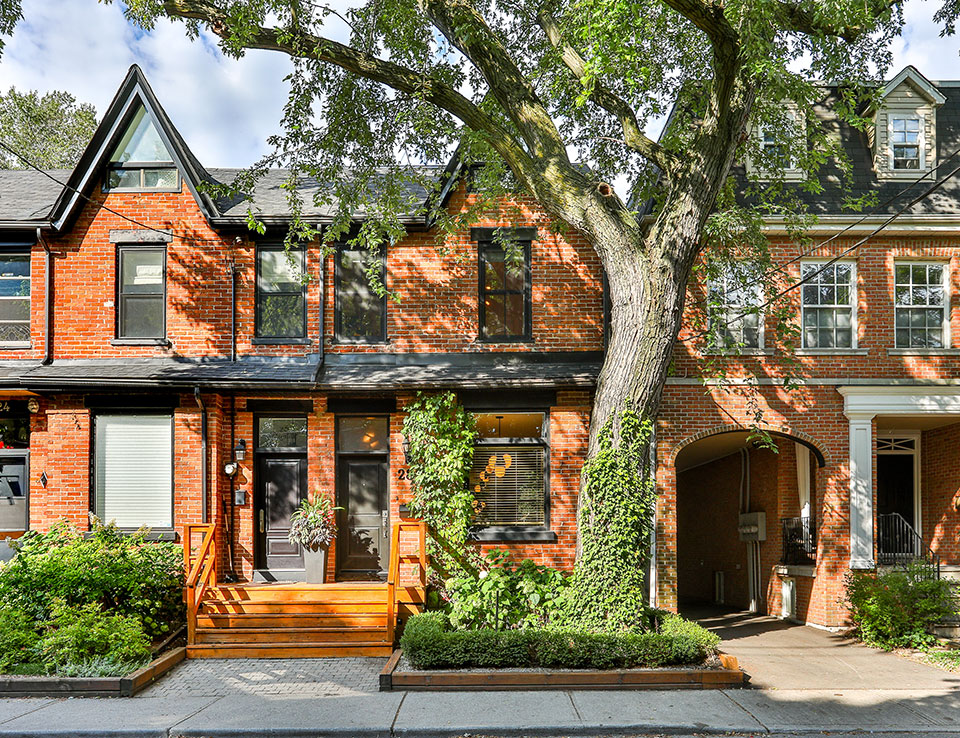
Freehold Homes (Detached, Semi-Detached, Townhomes)
These are some of Toronto’s original housing styles, many dating back to the late 1800s.
They are commonly found in neighbourhoods such as Roncesvalles, Annex, High Park, Leslieville, and Riverdale.
These homes tend to attract buyers who are thinking long term and prioritizing space, control, and neighbourhood character.
Key characteristics:
- No monthly maintenance fees
- Full ownership of land and structure
- Typically 1,500 to 4,000+ square feet
Best suited for:
- Families
- Buyers planning for long-term growth
- Those who value walkability and established communities
Detached Homes in Outer Toronto
As the city expanded after World War I, more detached homes were developed in areas like North York, Scarborough, and Etobicoke.
These areas often appeal to buyers who are prioritizing space and affordability over proximity to the downtown core.
Key characteristics:
- Larger homes and lots
- More privacy and separation from neighbours
- Greater reliance on driving versus transit
For many buyers, this is where they begin to trade proximity for size.
Condominiums
Condos became more prominent in the early 2000s as affordability increased across the city.
They are often the entry point into the Toronto real estate market for first-time buyers.
Key characteristics:
- Typically 500 to 900 square feet
- Amenities such as gyms, concierge, and security
- Lower purchase price compared to freehold homes
Trade-offs:
- Monthly maintenance fees
- Less space for long-term growth
- Many units designed for singles or couples
Condos can be an excellent first step into the market, especially for buyers focused on location and lifestyle.
Toronto Is Not One Market. It Is Many Micro-Markets
One of the biggest misconceptions is that there is a single Toronto real estate market.
In reality, every neighbourhood behaves differently.
Even areas located close to each other can vary significantly in:
- Price
- Demand
- Lifestyle and amenities
- Access to green space
- School rankings
- Overall feel
What drives demand in one neighbourhood may not apply in another.
Examples:
- Leslieville offers a residential feel with close proximity to downtown
- Roncesvalles provides access to High Park and a strong community atmosphere
- Cabbagetown is known for historic charm and limited parking
Each neighbourhood comes with its own buyer profile, pricing dynamics, and trade-offs.
Understanding this early helps you avoid overgeneralizing the market and making decisions based on incomplete information.
How First-Time Buyers Should Choose a Neighbourhood
Before you start viewing properties, take time to define what matters most to you.
This step is often overlooked, but it has a direct impact on how successful your search will be.
Consider:
- Commute and proximity to work
- Lifestyle preferences such as walkability versus space
- Access to parks, schools, and transit
- Alignment with your budget
If you are unfamiliar with certain areas, spend time exploring them in person.
Walk the streets. Visit local shops. Experience the neighbourhood during the week and on weekends.
A neighbourhood can look great on paper, but the real test is how it feels when you are there.
Understanding Toronto Real Estate Data (TRREB)
Each month, TRREB releases data that drives many of the headlines you see in the media.
The most common metrics include:
- Number of sales
- Average price
- Days on market
These numbers are useful, but they need to be interpreted correctly.
At a high level, they provide a snapshot of overall market conditions. At a local level, they can be misleading.
A slower segment in one area can exist at the same time as strong competition in another.
Understanding the difference between macro trends and micro-market reality is key to making informed decisions.
If you want a clearer, step-by-step understanding of how this all works, explore our complete Toronto home buying guide inside the Fox Marin First-Time Buyer Academy
Why Prices Vary So Much, Even on the Same Street
This is one of the most confusing aspects of buying real estate in Toronto.
Two homes on the same street can sell for very different prices.
The reason is simple. Small differences can have a significant impact on value.
Key factors include:
School districts
Highly ranked schools can drive demand and pricing.
Street conditions
Certain sections or even sides of a street can command a premium.
Lot size and layout
Small differences in width, depth, and usability can matter.
Parking availability
A major lifestyle factor in many Toronto neighbourhoods.
Proximity to parks and green space
Access to well-known parks and local green space can increase demand.
Understanding these details helps you evaluate properties more accurately and avoid overpaying.
Why Condo Prices Vary Between Buildings
Two condo buildings located side by side can perform very differently.
The difference often comes down to management, financial health, and overall reputation.
Key drivers include:
Maintenance fees
Higher fees or poorly managed reserve funds can impact affordability.
Building reputation
Owner-occupied buildings often perform differently than investor-heavy ones.
Property management
Well-managed buildings tend to maintain value more consistently over time.
Buyers who look beyond the unit itself and evaluate the building as a whole tend to make stronger long-term decisions.
Understanding Market Cycles and Seasonality
The Toronto real estate market follows a fairly predictable annual cycle.
Understanding this can help you set expectations around timing and competition.
Winter (January to February)
Lower inventory and slower activity
Spring (March to May)
Peak market activity with strong competition
Summer (June to August)
Slower pace, particularly in August
Fall (September to November)
Second busiest period with strong inventory
December
Typically very quiet
While these patterns are consistent, market conditions can still vary year to year.
When Is The Best Time to Buy
Trying to time the market perfectly is extremely difficult.
The better approach is to focus on preparation.
The best time to buy is when:
- You are financially ready
- You understand what you want to purchase and where
- You have a clear understanding of market value
- You have the right guidance and strategy in place
Buyers who are prepared tend to perform better than those trying to predict short-term market movements.
Final Thoughts
Buying your first home is one of the most important financial decisions you will make.
The more you understand how the Toronto real estate market works, the more confident your decisions will be.
Start with the big picture. Narrow your focus to specific neighbourhoods. Then evaluate individual properties with a clear and informed perspective.
Preparation is what turns a complex process into a manageable one.
Stay Ahead of the Market
Looking for more insights, strategies, and real-world advice? Explore from the Fox Marin team:
Contact Us (We’re Nice).
Fox Marin has earned its reputation as Toronto’s premier downtown luxury real estate team, backed by over *$580 million in sales, more than 1,000 successful transactions, and over 500+ glowing 5-star Google Reviews. Discover the advantage of working with a proven team with a track record for winning results.
(*Source: Jan. 1, 2018 – Sept 1, 2025, RE Stats Inc. & Exclusive)
—
This article was written by Ralph Fox, Broker of Record and Managing Partner here at Fox Marin Associates. Ralph is a Torontonian native who recognized from an early age that the most successful people in life apply long-term thinking to their investments, relationships, and life goals. It’s this philosophy, along with his lifelong entrepreneurial drive and exceptional business instincts, that help to establish Ralph as a top agent in the real estate market in downtown Toronto.