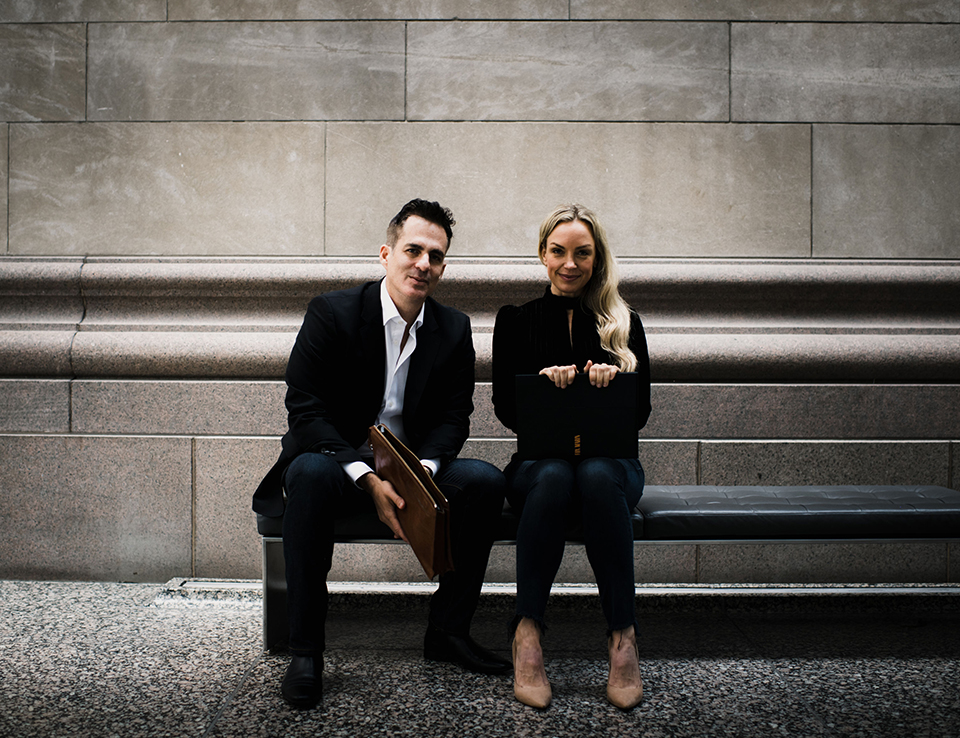
At the start of the year in January, Ralph Fox and Zhen Liang recorded a conversation in which they predicted the Toronto market may be showing signs of a bottom, as transaction volumes appeared to have found a floor, and the two brokers felt cautiously optimistic. Ten months later, with September sales roughly 9 percent below last year and the buyers who were circling in the spring summer now sitting firmly on their hands, Fox opened their follow-up episode with an admission: “Boy, did we ever get it wrong.”
Over the spring and into the summer, the market appeared to be playing out as the two had predicted; however, everything shifted around Labour Day, when the US-Canadian trade ware escalated to another level, and talk of rising interest rates caused sentiment to tank. The Toronto real estate market recorded a 9 percent drop in sales compared with last September’s anemic sales. Zhen and Ralph look back at what they got right and wrong, and more importantly, where they think the market is heading.
Watch the Full Episode
If reading isn’t your thing, press play. In this episode, Ralph Fox, Broker of Record, Fox Marin, and guest Zhen Liang, founder and Broker of Record, Prime Properties TO, share what they’ve learned from working with hundreds of Toronto buyers and sellers.
Key Takeaways
Toronto home sales were down about 9 percent year over year in September 2026.
Despite a 20 to 25 percent price drop from peak, Ralph Fox says higher interest rates mean affordability has barely improved for many buyers.
Both Fox and Liang describe the stall in sentiment as the major issue rather than an affordability problem: well-qualified buyers are choosing to wait.
Turnkey lowrise homes in central and east-end Toronto, lofts, are still drawing multiple offers; small condos and unrenovated houses are taking the biggest hit.
Neither Fox nor Liang expects the end of the federal foreign buyer ban to move Toronto prices, and both expect more of the same: a flat market for at least a year or two, with sales well below the 10-year average.
What Changed in Toronto Real Estate in August 2026?
The Toronto market was tracking ahead of 2025 through July, then reversed in August when trade talks with the United States stalled, and fixed mortgage rates jumped. Liang gives the spring some credit: prices had been up month over month for three or four months in a row, and sales looked to improve modestly over last year. Then August arrived and, as Liang puts it, everything went south.
The trigger wasn’t one thing. Liang points to the absences of a trade deal, renewed talk of American deficit spending pushing bond yields higher, and fixed rates climbing close to 100 basis points in two or three months. Fox adds the wider backdrop: the war involving the United States and Iran, oil prices pulling everything else up with them, and inflation turning back upward just as the spring had started to feel stable.
Fox discussed how, for a brief moment, it felt like a trade deal was imminent and the toxic rhetoric was about to end. Instead, he says, the market got slammed back down “like a giant wave to the bottom of the ocean.”
By September, Liang says sales were down about 9 percent from the previous year, and October right now isn’t looking any better. Fox Marin’s own read on the September Toronto Real Estate Market September 2026: Stuck in Neutral, and the live numbers by property type and district are on Fox Marin Market Intel.
Why Aren’t Qualified Toronto Buyers Buying?
Right now, many buyers are choosing not to. Liang describes finding a client a “ten out of ten” condo, priced in the eight-hundred-thousand range, in a segment with nine months of inventory. The listing had been sitting for 60 days with no action. His clients still wouldn’t write an offer after a week and a half of thinking about it.
“It’s not even about what I can get it for, or starting a hundred thousand dollars below the list price,” Liang says. “It’s just, I don’t even know if I want to buy this thing. Is it the right time?” Buyers are becoming more and more hesitant, regardless of the price point or opportunity.
Fox sees the same thing. Buyers walk into a property looking for what’s wrong with it, trying to talk themselves out of it before they’ve determined whether it suits their needs. He reminds every client that the perfect property does not exist at any price point.
“It doesn’t matter if you have a six hundred thousand dollar budget or a sixteen million dollar budget, you’re always making compromises, and you’re always making trade-offs.” – Ralph Fox, Broker of Record, Fox Marin
Liang noted nearly every buyer his team worked with in 2026 had a life reason to move: a death in the family, a divorce, a new baby, a marriage. Almost nobody purchased it because they thought it was a good moment to own Toronto real estate.
“Nobody’s excited to buy real estate right now,” Liang says. “No one is thinking that if they buy now, prices are gonna go up.”
Fox finds the psychology telling. For 30 years, buyers paid premiums and wished prices would come down. Now prices have come down sharply; many of those same buyers have disappeared. If you walked into a store and everything was on sale, he says, you’d expect people to buy. Liang says many shoppers/buyers think the sale will get even bigger. For a fuller look at the standoff between buyers and sellers this fall, read Nobody’s Budging: Inside Toronto’s Fall Real Estate Standoff.
Is Toronto Affordability Actually Better After a 25% Price Drop?
Not by as much as the headlines suggest, according to Fox. Prices in the segments Fox Marin works in are down 20 to 25 percent from peak, but the interest rate a buyer pays today is far higher than the rate at the top of the market. If you run the monthly carry on a comparable property and, in Fox’s experience, some buyers are paying more monthly to live in the same kind of home than they would have at peak prices.
Liang discusses a situation where a condo was listed for rent at roughly $4.75 a square foot, which was on the high side for the building. It drew four or five offers. The winning tenant paid a year upfront, showed a $250,000 household income, and produced the parents’ notice of assessment as guarantors. The upfront rent alone exceeded a 10 perfect down payment. An investor buying that condo at the asking price with that tenant in place would have been cash-flow positive from day one. The tenant could have been that owner.
“It’s a sentiment problem. It’s not an affordability problem.” – Zhen Liang, Founder and Broker of Record, Prime Properties TO
Fox adds that Fox Marin’s leasing division regularly sees household incomes of $300,000 among people renting a two-bedroom in central Toronto. That is the norm, not the exception, and it says more about who can participate in this market and who’s choosing not to.
What Is Still Selling in Toronto Right Now?
Turnkey homes in central and east-end neighbourhoods and some specifics on the west end, low-rise and lofts, are still moving, often with competition. Everything that needs work, carries risk, or sits in an oversupplied segment is stuck.
Liang’s team dealt with an east-end house the day before recording that drew 25 showings and six offers and sold well above what they expected. His explanation is simple: in highly desirable pockets where Fox Marin works, there are still more buyers than sellers because that housing stock rarely turns over even in this market environment.
Fox hears frustration from buyers who assume a buyer’s market means leverage everywhere. In central and downtown Toronto, for desirable properties in desirable areas, that leverage often isn’t there. Buyers are told this is the worst downturn ever, and they still can’t get a house in Riverdale, Leslieville or Trinity Bellwoods.
On the condo side, the divide is striking. There is a glut of inventory downtown, but very few well-laid-out units in strong locations, and those are the ones selling. Lofts, Fox says, are performing very well even in a downturn.
“Anytime we go take a listing appointment, and it’s a condo, when I check the title, I’m like, please have parking, please have parking,” Liang says. He has 550-square-foot listings without parking that are lucky to get one showing a week. A same-sized unit with parking drew 22 showings in a week and sold.
The other segment holding up is the top end. Fox describes K-shaped market where buyers who have done well in equities are rolling in cash. Liang sees down payments of a million dollars and budgets that jump by $300,000 after a conversation with parents. “Never underestimate the amount of money in Toronto,” Fox Says.
Will the Bank of Canada Raise Rates, and What Would That Do To The Market?
At the time of recording, markets were pricing in roughly a 70% chance of a hike at the October 28, 2026 announcement, and at least one more hike by year-end. Both Fox and Liang think a hike makes little economic sense, and both believe it would hit the housing marketing hard.
Fox argues that unemployment is rising, average pay is falling, core inflation excluding energy is in the low twos, and the real estate market and construction are struggling. Consumer sentiment is near an all-time low. Raising rates on top of that, he argues, punishes small-business borrowing, lines of credit, and credit cards, and signals a return to a hiking cycle that a weak economy can’t handle. Raising rates in Canada cannot reopen the Strait of Hormuz.
Liang agrees the hike doesn’t make sense, but thinks the Bank has cover to do it anyway because other central banks are hiking. Fox’s reply: none of those other countries are in the middle of a trade war with their largest trading partner.
“If we get one rate hike from the Bank of Canada, it is gonna spook the real estate market like crazy,” Liang says.
Will Ending the Foreign Buyer Ban Rescue Toronto Prices?
It will have little impact, according to Fox and Liang. The federal ban is set to expire on January 1, 2027, and some agents are treating that as the catalyst that turns the market. Fox is dismissive. The ban, he argues, had minimal effect on the market when it came in, other than scoring political points, because foreign capital was never as large a share of Toronto buying as people claimed. Even if the ban is lifted, provincial and municipal non-resident taxes totalling 35 percent remain in place, as does the vacancy tax. And if Ottawa follows the Australian model and allows foreign buyers only into pre-construction, that market is years away from pricing that makes sense.
Liang goes further, and this is the part of the conversation Fox says he has never heard anyone discuss. Liang believes mainland Chinese money is leaving Toronto, not returning. Two reasons: the collapse in Chinese real estate prices means families need to bring capital home to cover debt, and a 20 percent Chinese tax on foreign-held wealth is pushing some Chinese residents to liquidate. In heavily Chinese neighbourhoods in York Region, Markham, and parts of North York, he is watching homes bought at 2016 and 2017 peak, often with 60 or 70 percent down, sell for less than their purchase price, with the proceeds moving offshores. His parcel-registry checks keep turning up mainland Chinese sellers, not Hong Kong or Taiwanese ones.
Fox supports lifting the ban on principle. He has a client, a billionaire, who is renting in Toronto because the stack of taxes and restrictions makes ownership unattractive. Another high-net-worth client, after reviewing the list of taxes, wrote back one line: don’t they want wealthy people to live here?
“How can you claim to be a world-class city when you don’t allow foreigners to own property in that city?” Fox says. He expects the end of the ban to be a news-cycle event, maybe a small pop, and then nothing. For a different view of the 2027 timeline, see When Will Toronto Real Estate Recover? The Case for 2028.
Is Pre-Construction Dead in Toronto?
Liang doesn’t see anyone speculating on high-rise pre-construction condos anytime soon. People burned in this cycle will be as wary as the boomers who lived through the 1990s, and he half-jokes that the next wave of buyers will be his kids’ generation, who never knew what a 2022 pre-construction bubble was.
Fox agrees the platinum pre-construction broker era is finished: stacks released without prices, 24-hour decision windows, agents posing online as developers. But he reads the supply pipeline differently. By his estimate, new condo completions dry up around mid-2027. By the early 2030s, he expects real pressure on condo supply.
In Fox’s view, when pre-construction returns, it will be a slower, end-user-driven product: mid-rise buildings on streets like Bloor and College, sold to people who intend to live in them, with buyer walking into a showroom rather than making decisions online. He also expects immigration to return in a more structured form and the city to be forced to rework approvals, development charges and timelines to meet that demand. Liang’s challenge is fair: end users won’t wait four years for a building, so the financing model has to change too.
Has Toronto Real Estate Fundamentally Changed?
Liang says the reasons people buy have shifted: investors have largely left, except for sophisticated players adding units, but a regular house for a regular family in central Toronto still makes sense to own. What worries him is the suburbs, where back-to-back townhomes are still being built for under a million dollars. If AI hollows out middle-class jobs, he asks, who qualifies for the mortgage on an $800,000 or $900,000 entry-level suburban townhome?
“To buy in central Toronto, I would say, is the countercyclical move right now.” – Zhen Liang, Founder and Broker of Record, Prime Properties TO
Fox is more sombre about the bigger picture. A decade ago, he says, Canada had the world’s wealthiest middle class. Today the OECD projects it dead last in GDP growth for the next decade. Downtown crime and drug use have changed how the city feels, and he sees younger Canadians thinking about leaving for opportunity elsewhere. In his view, the government has stopped promising affordability and pivoted to mass-producing rentals.
Still, he agrees with Liang’s contrarian case. Prices in Roncesvalles are virtually flat through this entire downturn. Capital, talen and ideas keep pooling in the city. Fox points to 1980s New York, when buildings near Madison Square Garden were nearly given away, and the city came back. Just like market, cities go through cycles. If things changed this much in a decade, he says, they could change back just as fast.
Where Do Fox & Liang See Things Heading?
More of the same, for at least a year or two. Fox won’t predict beyond that because as he notes, nearly every expert forecast this year has been wrong, including the one he and Liang made in January, which you can read in Early 2026 Toronto Real Estate Market: More Activity, Softer Prices, & a Shift in Sentiment. He sees nothing changing in the economy or in the relationship with the United States, with or without the midterms.
Liang is more bearish in 2027 than Fox. His math has the current downturn tracking the last one through the end of 2027, followed by years of sideways trading rather than a V-shaped recovery.
So should a buyer wait? Not necessarily, Fox says. The decision right now is less financial and more about long-term lifestyle. If you can see yourself in a home for ten years, and you’ve found a real opportunity, and you understand that it could go lower before it goes higher, he sees wisdom in buying while the market is down rather than up.
“Almost every large-scale real estate developer at one point or another has gone bankrupt trying to time the market,” Fox says. Liang adds: if you’re buying for the right reasons, you need enough dry powder and patience to wait it out.
The Toronto market slowed in August 2026 because the Canada-US trade deal failed to materialize while fixed mortgage rates rose close to 100 basis points in two to three months. Rising bond yields, higher oil prices and renewed inflation added to the uncertainty, and buyer who had been active through July moved to the sidelines.
Most likely not. The federal ban on foreign buyers is scheduled to end on January 1, 2027, but provincial and municipal non-resident taxes of 35 percent remain in place, along with vacancy taxes. Toronto brokers Ralph Fox and Zhen Liang both expect little lasting effect on the market if the ban is removed.
Only modestly. Toronto prices are down roughly 20 to 25 percent from peak in many segments, but today’s mortgage rates are well above what buyers paid at the market’s top. For many households, the monthly cost of a comparable home has barely changed, so affordability hasn’t improved as much as price charts suggest.
Turnkey, move-in ready homes in established central and east-end Toronto neighbourhoods, lofts in historic buildings. Many of these properties still attract 20 or more showings and multiple offers, while homes needing renovation and small condos without can sit on the market for weeks or months.
Nobody knows for certain, and recent forecasts have been wrong. Zhen Liang believes the current downturn tracks the last one from the eighties and will run through the end of 2027, followed by several years of flat prices. Ralph Fox expects more of the same for at least a year or two, with no quick recovery.
The Fox Marin Perspective
The market will feel like this for a while, and the people who do well through a downturn are the ones who buy a home they can live in for ten years. Fox sees real wisdom in buying when the market is down, as long as you aren’t overextending yourself and understand the downsides and risks involved.
If you want a second set of eyes on a property, a neighbourhood, or to discuss your next real estate move, get in touch with the Fox Marin team. We’ve helped hundreds of Toronto buyers and sellers navigate the Toronto real estate market for well over a decade.
Stay Curious. Stay Informed.
The Toronto real estate market is always evolving. Whether you’re buying, selling, investing, or simply keeping an eye on what’s happening in the city, we’re here to help you make sense of it.
Explore more of our insights, market commentary, and conversations about Toronto real estate.
Good real estate decisions start with good conversations. Whether you’re preparing for your next move or just exploring your options, we’d love to hear from you. Contact Us (We’re Nice).
Fox Marin is recognized as one of Toronto’s most trusted real estate teams, with 550+ five-star Google reviews, more than 1,000 successful transactions, and over $700 million in sales volume. (*Source: RE Stats Inc. / Loft47, Jan. 1, 2018 – Aug. 31, 2026)
—
This article was written by Ralph Fox, Broker of Record and Managing Partner here at Fox Marin Associates. Ralph is a Torontonian native who recognized from an early age that the most successful people in life apply long-term thinking to their investments, relationships, and life goals. It’s this philosophy, along with his lifelong entrepreneurial drive and exceptional business instincts, that help to establish Ralph as a top agent in the real estate market in downtown Toronto.
Ralph Fox & Kori Marin
Kori and Ralph's love affair with Toronto Real Estate have spanned several decades! It is incredible to see how far their mad crazy passion for design, architecture and innovation has taken them, which is only the beginning of their bigger vision and relentless goal-setting! Kori and Ralph have created this forum for their readers to explore the good, the bad, and the sometimes ugly real estate. An honest perspective about the ins & outs of the business - one in which they live, work and experience first hand every day. Nothing is more interesting than the "real" in real estate!