If you turn on the news this year, you might think everyone is priced out of Toronto real estate. Affordability is still stretched and owning here remains out of reach for many, but this downturn is also creating generational opportunities.
In August 2026, the average sale price across the City of Toronto was $979,000. For the second time this year, the city average fell below the one-million-dollar mark, which tells you most properties selling in Toronto still trade under $1 million. Since July 1, there have been roughly 3,240 sales in the City of Toronto under $1 million. That is about 42 homes a day.
The real question isn’t whether you can buy in Toronto for less than a million, because you can. The question is what you get in return, and where you have to look. For a first-time buyer or someone moving to the city, this price point is genuinely accessible.
Watch the Full Episode
If reading isn’t your thing, press play. In this episode, Ralph Fox and Kori Marin share what they’ve learned from working with hundreds of Toronto buyers and sellers.
Toronto Just Fell Below a Million
The city average in August 2026 was $979,000, down about 1.3% year over year. Across the broader GTA the average was slightly higher at $993,000, with a median of $770,000.
The Toronto market is balanced and leaning toward a buyer’s market, depending on the price point and the property. Sales have fallen by less than 1% annually, but new listings are down 7.4% and active inventory is down 9.5%, leaving about 4.6 months of supply, with homes taking roughly 35 days to sell. For a buyer with a solid budget and some patience, time is on your side for the moment.
The Ladder Still Has Rungs Under a Million
The clearest way to size up your options is the property ladder, using August 2026 GTA averages by type. Condo apartments sat around $620,000. Condo townhouses, the type that gives you the feel of a house without the lawn and the snow, were near $680,000. Freehold townhouses averaged about $882,000. Semi-detached reached roughly $930,000. Only detached averaged over the line, at just under $1.3 million.
Four of the five categories still average under a million. If you’re watching your budget, worried about a softening market, or working with a fixed down payment, this is the range to understand.
Before you stretch to the top of your budget, do the monthly math. On a $1 million purchase, the minimum down payment is $75,000 (5% on the first $500,000 and 10% on the remainder, plus insurance). You also need your Toronto land transfer taxes in cash at closing, and those cannot be rolled into the mortgage. Depending on rates, expect a monthly carry between $3,900 and $4,300 before other expenses. Our land transfer tax and mortgage calculators will give you exact figures in a couple of minutes.
Just because you can afford the payment doesn’t mean you should overextend. As Kori Marin, co-founder of Fox Marin, puts it:
“To be cash poor or house poor is far from ideal. I’ve been in that position myself, and believe me, it wasn’t an enjoyable pair of years.” – Kori Marin, Co-founder, Fox Marin
Yes, You Can Still Buy a Freehold, For Now
Low-rise has traditionally been the category most out of reach for first-time buyers. Of the 3,240 sales under $1 million since July 1, about 73% were condos, which is no surprise. But 27% were freehold, and that is not a rounding error. That breaks down to roughly 525 detached houses, 236 semis, 94 row houses, and a small number of duplexes and links, all sold for less than a million dollars.
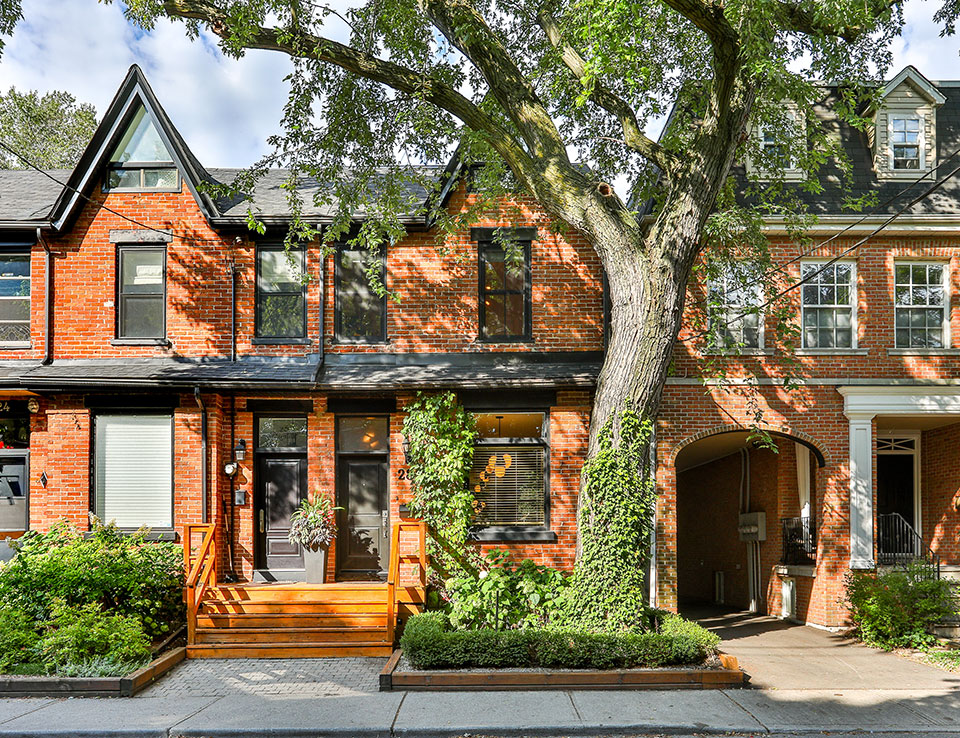
Look closer at that figure and it gets more interesting. Of the freeholds sold, about 319 were bungalows, alongside a mix of two-storey and three-storey houses and 75 backsplits. These are not the glamorous listings, and that is exactly where the opportunity sits. The wartime bungalow, the raised bungalow and the mid-century backsplit tend to sit on good-sized lots in real neighbourhoods, and they were built with solid bones. Median stats on these sales: 3 bedrooms, 2 baths, $4,307 in property taxes.
Ralph Fox makes the case for the layout most buyers overlook:
“Many people are tired of houses with no walls on the main floor, a box of open space filled with hundreds of pot lights. Homeowners are over it and want defined rooms with clear flow between them. That is exactly why returning to the old-fashioned backsplit can be the right solution for many.” – Ralph Fox , Broker of Record, Fox Marin
The main benefit of a well-maintained but dated bungalow or backsplit is room to grow. You can buy in good condition now, live in it, and add value as your income rises through a renovation, a second storey or a rear addition. Even new flooring, a new kitchen or updated bathrooms move the needle. For a first home, a house you can improve over time often makes more sense than one you can barely carry. So if backsplits aren’t showing up in your saved searches on the Fox Marin search platform, start watching for them.
The Value is East, North and West of the Core
For freehold at this price point, geography decides everything. As Ralph puts it, picture the city as a series of concentric circles. The closer you are to the centre and the Yonge line, the more a sub-million budget points you to a condo. As you move outward, freehold options open up.
Good freehold value generally sits east of the core: Leslieville, Greenwood, Coxwell, Riverdale, the Danforth, the Beaches, and out into Scarborough. There are western options too, from Roncesvalles and Trinity Bellwoods at the top of the price point to Rexdale, Jane and Finch, and Caledonia. The north holds solid supply as well. The single largest cluster of sub-million freehold sales was Jane and Finch and Downsview, an area slowly shedding its old reputation as it gentrifies. For now, Summerhill, Forest Hill, Leaside and Lawrence Park are off the table.
When you move into less familiar areas, evaluate them the way you would any long-term investment: walkability, transit, densification, retail, schools, safety and your actual commute. Take the time to do the due diligence.
Asked where they would each buy a freehold under $1 million, neither Ralph nor Kori hesitated. Ralph chose East York, for its proximity to the core, the energy of the Danforth, and how fast it is changing. Kori picked Weston, for the UP Express and the densification that followed it. She has watched this play out before. Years ago she put clients into a detached two-storey there for about $480,000, a number most buyers at the time thought impossible, and the house has since sold for roughly double.
The Condo Townhouse
Sitting between the bungalow and the high-rise is the property type most buyers skip past. The condo townhouse feels like a house, usually over several floors, with no elevator, and it can be the right first move for a couple planning a child in the next year or two.
The catch is quality. Many condo townhouses are poorly built and chopped into too many levels. The better ones are genuinely livable and still affordable, and they are worth the extra effort to find. If you have a dog, especially a big one, walking straight out your own door while still getting the security and amenities of a condo corporation is hard to beat.
Where the Condos Under $1 Million Are
Condo supply under a million is concentrated in a way freehold supply is not. Two downtown districts, C01 and C08, account for 784 of 2,370 sales, close to a third of the entire market. To put that in perspective, the busiest condo district sold nearly five times as many homes as the busiest freehold district.
Outside the core, the volume follows the Yonge subway north into Willowdale and Bayview Village, and west into Islington and Mimico. Those are the pockets worth watching if you want more square footage per dollar, a shorter elevator wait and a building that isn’t 60 storeys tall.
What Actually Sold in Toronto Under a Million This Summer
Aggregate figures are one thing, actual sales are another. A few examples from this summer, all from other brokerages, show what the money buys across the city.
On the condo side, a spacious loft at King and Shaw with exposed concrete ceilings, one bed plus den and 850 square feet sold for $655,000. A newer one-plus-den on the Lower East Side waterfront fetched $563,000.
When a loft in a historic building hits the market, it still draws a crowd. A one-bedroom at Sorauren in Roncesvalles sold for $750,000, about 25% over asking on offer night. Even in a downturn, buyers pay a premium for central, characterful space. They aren’t building these anymore.
On the freehold side, a move-in-ready two-bedroom row house near King Street East sold for about $740,000. A bright corner two-bedroom near Dundas West and Trinity Bellwoods went for $950,000 with parking, which works out to under $1,000 per square foot. Head out to Birch Cliff and Cliffcrest in Scarborough and you’ll find genuinely attractive detached bungalows in the $700,000 to $800,000 range with multiple parking spots. Turnkey, not teardowns.
The Shared-Wall Trade-Off
Plenty of buyers are fixated on detached and unwilling to share a wall, and they pay the premium for it. Under a million that is possible, but the house will be small. Row houses get dismissed too easily. End units are effectively semis, and a well-designed row house with skylights and a bright open rear can fill with light.
One piece of practical advice from Kori that no listing photo will give you: find out who your neighbours are before you buy anything with a shared wall.
“No matter how many bath bombs the listing agent puts in the property, if your neighbour smokes, the smell will still get through, and you’ll always smell cigarettes.” – Kori Marin, Co-founder, Fox Marin
Take a look around. Check the adjacent yards. That kind of care can save you years of regret.
The Real Cost of Trading Up
For most Toronto condo owners, the move-up math is stark. Sell your condo for $650,000 with $350,000 left on the mortgage, and after commissions, HST and legal fees you carry forward roughly $260,000 in equity. Buy a $1 million house and you own about $38,000 in land transfer tax, this time with no first-time buyer rebate, put down $222,000, and take on a new mortgage of nearly $780,000.
Your monthly carry rises from about $2,600 to about $4,260 before taxes and insurance. That’s nearly $20,000 more a year, plus roughly $80,000 in friction costs to close both deals. Without family help, being a move-up buyer in Toronto is expensive.
But people who bought a condo when they were single are now married with a child sleeping in a closet, and at that stage the cost matters less than the need to move. This is the everyday reality when the old property ladder no longer works the way it did for the last thirty-five years. If you’re weighing a move, the best first step is a straight conversation about what your condo would actually sell for and whether the trade-up is worth it.
Where We’d Put a Million This Fall
For freehold value, the small row houses south of Queen in South Riverdale are hard to beat. For maximum negotiating power, go east to Scarborough and hunt bungalows. For long-term upside at a lower entry point, look at Danforth Village and Weston.
On condos, watch the price per square foot. If you can buy in a good building and location around $900 per foot, you’re on the right track, because replacement cost today is $1,500 per foot and climbing. Ralph’s view is that if you can secure a loft, it’s an excellent long-term hold. They’re always in demand and no one is building more.
Ralph also points to supply. Building at replacement level starts at $1,500 per square foot, and almost no new supply comes only after early 2027. Existing, well-built, livable stock selling at reasonable prices only gets more attractive from here.
Frequently Asked Questions
Yes. Since July 1 there have been over 800 freehold sales in the City of Toronto under one million dollars, including detached bungalows, semis and row houses. They are concentrated east, north and west of the core rather than in the prestige central neighbourhoods.
In August 2026 the City of Toronto average was around $979,000, the GTA average was about $993,000, and the GTA median was close to $770,000. These figures change monthly, so check current market data before making any decisions.
Quite a lot. The average 416 condo sits around $650,000. Recent sub-million sales include two-bedroom lofts with parking, waterfront one-plus-dens, and boutique units across downtown east and west.
The east end offers the most freehold supply at this budget, from Leslieville and the Danforth out to Scarborough. The north around Downsview and the west toward Weston and Jane and Finch also hold real opportunity, especially where transit is expanding and neighbourhoods are gentrifying.
They are older, often mid-century low-rise homes on good lots. Many are solidly built and well kept even if unrenovated, which makes them ideal for buyers who want to buy in good condition now and add value over time.
A minimum of $75,000 down (5% on the first $500,000, 10% on the remainder, insured), plus Toronto land transfer taxes in cash on closing. Expect a monthly carry of $3,900 to $4,300 depending on your rate.
It can be, but you need to budget for it. Trading a $650,000 condo for a $1 million house can raise your monthly costs by around $1,660 and cost roughly $80,000 in friction to complete both deals. Whether it makes sense depends on your equity, your condo’s saleability and your stage of life.
The Fox Marin Perspective
In Toronto in the fall of 2026, four of the five rungs on the property ladder still sell, on average, for less than a million, with thousands of homes trading under that mark every month. Often the best opportunities hide in the neighbourhoods and property types most buyers overlook. The bungalow, the backsplit, the condo townhouse, the end-unit row house and the older, better-built condo are where a budget goes furthest and equity builds over time.
If you’re trying to figure out what your budget can actually buy this fall, or whether now is your time to move up, the Fox Marin team is happy to talk it through. Contact us anytime.
Fox Marin is recognized as one of Toronto’s most trusted real estate teams, with 550+ five-star Google reviews, more than 1,000 successful transactions, and over $700 million in sales volume. (*Source: RE Stats Inc. / Loft47, Jan. 1, 2018 – Aug. 31, 2026)
—
This article was written by Ralph Fox, Broker of Record and Managing Partner here at Fox Marin Associates. Ralph is a Torontonian native who recognized from an early age that the most successful people in life apply long-term thinking to their investments, relationships, and life goals. It’s this philosophy, along with his lifelong entrepreneurial drive and exceptional business instincts, that help to establish Ralph as a top agent in the real estate market in downtown Toronto.
Ralph Fox & Kori Marin
Kori and Ralph's love affair with Toronto Real Estate have spanned several decades! It is incredible to see how far their mad crazy passion for design, architecture and innovation has taken them, which is only the beginning of their bigger vision and relentless goal-setting! Kori and Ralph have created this forum for their readers to explore the good, the bad, and the sometimes ugly real estate. An honest perspective about the ins & outs of the business - one in which they live, work and experience first hand every day. Nothing is more interesting than the "real" in real estate!