Toronto’s real estate market runs the full spectrum – dense downtown high-rises to detached houses in the outer boroughs. Buyers entering the market in late 2026 will find a shifting landscape, especially within the attached housing sector. With thousands of active listings across the Greater Toronto Area, knowing the difference between property types will save you real time and real money. This is especially true for anyone buying a home in Toronto.
The choice comes down to balancing purchase prices, ongoing carrying costs, and where you actually want to live. One thing that catches buyers off guard: the City of Toronto applies its own Municipal Land Transfer Tax (MLTT) on top of the provincial tax, and that affects your closing costs regardless of what you buy. Understanding the distinct categories of housing means you go in with your eyes open.
Condominium Apartments and High-Rise Living
Condos make up a large portion of what’s available in Toronto, ON. As of late August 2026, there were approximately 5,600 to 5,620 active condo listings for sale in the City of Toronto on the TRREB MLS system. Across the broader Greater Toronto Area, active condo listings hovered around 8,061 units at the end of the second quarter – so inventory is not the problem right now.
Pricing varies considerably by location and building amenities. Trailing 12-month data up to August 2026 puts the Toronto median condo sold price at roughly $582,000, or about $761 per square foot. In the second quarter of 2026, the average selling price specifically within the City of Toronto was $667,916, while the broader GTA median condo apartment sale price sat at $541,000. There’s a meaningful gap between those two figures, and it matters depending on exactly where you’re looking.
Popular Condo Neighbourhoods in the City
Liberty Village and King West are two of the most recognized condo neighbourhoods in Toronto. King West features converted warehouse and loft buildings alongside newer developments, with immediate access to downtown restaurants and entertainment venues. It’s a different product than what you’ll find in a standard glass tower.
Liberty Village operates more like a self-contained live-work community – newer residential towers integrated with ground-level retail and grocery options. If you’re drawn to either area, go in expecting high density and a primarily pedestrian-oriented lifestyle.
Waterfront and Luxury Condo Options
The Lake Ontario shoreline is its own category. Waterfront condos for sale in Toronto, ON command premium prices for unobstructed lake views and immediate access to waterfront trails, and the buildings range from older established towers to brand-new construction.
Luxury condos in the downtown core and along the waterfront push well above the city’s median price point – extensive square footage, private elevator access, premium amenities. If you’re looking at new construction homes in Toronto, ON, most new developments fall into this luxury high-rise category. That’s just where the pipeline is right now.
Budgeting for Condo Maintenance Fees
Monthly maintenance fees are part of condo ownership, full stop. They cover the upkeep of common elements and building insurance, and Toronto condo maintenance fees average roughly $0.50 to $0.75 per square foot per month. Factor that into your debt-to-income ratio when you’re qualifying for a mortgage – lenders will.
The range across the city runs from about $0.55 up to $1.00 or more per square foot depending on the building’s age, the scope of its amenities, and its overall financial health. Newer and luxury buildings with extensive facilities sometimes exceed $1.20 per square foot monthly. Those numbers add up fast on a larger unit.
Reviewing the Status Certificate
Before you firm up a condo purchase in Ontario, your lawyer needs to review the building’s status certificate. This document lays out the financial health of the condo corporation – current reserve fund balance, any pending special assessments, any legal disputes involving the building. Don’t skip this step.
The status certificate also confirms exactly what your monthly maintenance fees cover. Some buildings include utilities like heat and water; others don’t. You want to know which you’re dealing with before you close.
Townhouses, Duplexes, and Multiplexes
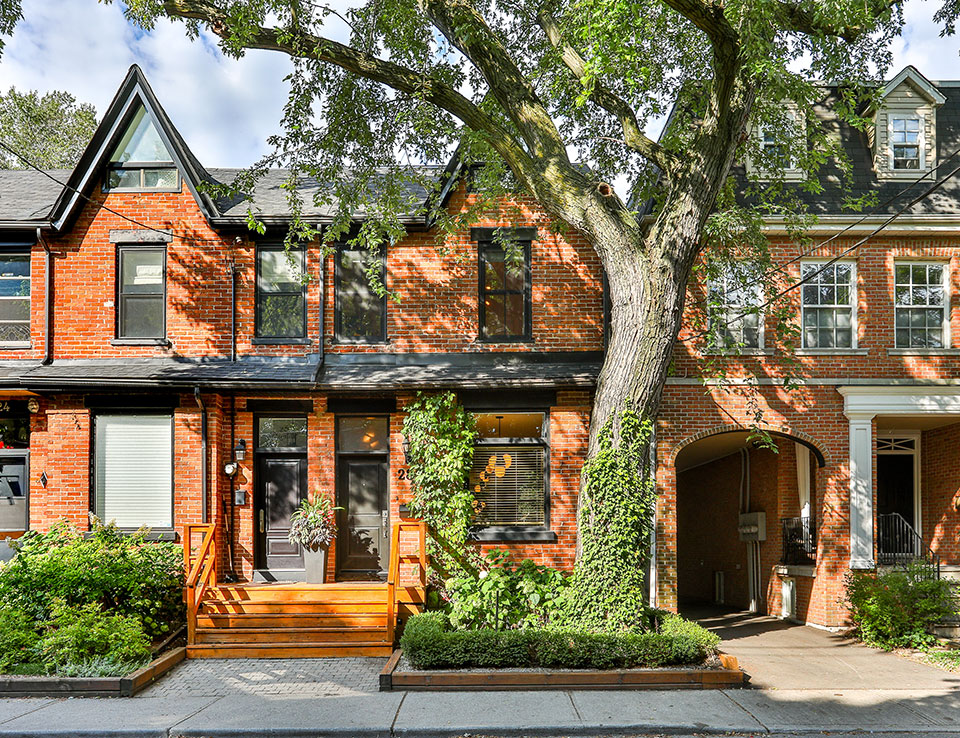
Buyers who want more space than a standard apartment but can’t stretch to a detached house often land on townhomes and multiplexes. Toronto townhomes for sale come in two main legal structures: freehold and condominium. Freehold means you own the home and the land with no monthly maintenance fees. Condo townhouses include shared exterior maintenance and monthly dues – the structure looks similar from the street, but the ownership model is meaningfully different.
Duplexes and multi-family properties appeal to buyers who want to offset their mortgage with rental income. The city has recently updated zoning rules to allow more multiplex developments in traditionally single-family neighbourhoods, which is slowly increasing the inventory of multi-unit homes across the boroughs.
Low-Rise Apartments and Co-ops
Co-operative apartments are a smaller slice of the market, but they’re worth knowing about. In a co-op, you purchase shares in the corporation that owns the building rather than acquiring a deed to a specific unit. These properties often list at lower prices than standard condos, but they require larger down payments and board approval – which slows the process and limits your financing options.
Low-rise boutique apartment buildings offer something different from massive glass towers: fewer residents, fewer amenities, and monthly maintenance fees that tend to sit on the lower end of the city’s average. You’ll find them more often in established residential neighbourhoods than in the downtown core.
Single-Family Detached and Century Homes
Detached single-family homes are a significant part of the Toronto housing landscape, particularly outside the immediate downtown core. Private lots, no shared walls, full control over exterior modifications – and the highest price tags in the market, with all maintenance costs sitting entirely with you.
The city’s tax structure matters here. Toronto homebuyers pay a Municipal Land Transfer Tax (MLTT) on top of the Ontario provincial land transfer tax. For purchases up to $3 million, Toronto’s MLTT generally matches the provincial LTT’s marginal rate brackets of 0.5% to 2.0%. As of April 1, 2026, graduated higher rates of up to 7.5% or more apply to high-value residential properties priced above $3 million. If you’re shopping at that level, budget accordingly.
Older Properties and Renovations
Many detached properties in Toronto’s older neighbourhoods are century homes – over 100 years old. The architectural details are genuine and often irreplaceable, but these houses regularly need extensive structural or electrical updates. Specialized inspections for outdated wiring, aging foundations, and lead plumbing aren’t optional; they’re the price of due diligence on an older property.
Renovating also means working with city permits and potentially heritage designations. If you’re planning major additions or structural changes, verify the property’s zoning and heritage status before you make an offer – not after.
Frequently Asked Questions
What is the difference between a freehold townhouse and a condo townhouse in Toronto?
A freehold townhouse means you own both the structure and the land beneath it, with no monthly maintenance fees. A condo townhouse means you own the interior of your unit, but a condo corporation owns the exterior and common areas. Condo townhouse owners pay monthly fees to cover exterior upkeep, landscaping, and shared insurance.
Can I legally convert a single-family detached home in Toronto into a multiplex?
Yes, recent zoning changes in Toronto generally permit the conversion of single-family homes into multiplexes, such as duplexes or triplexes, in most residential neighbourhoods. The conversion must still comply with specific building codes, fire safety regulations, and lot-size requirements. Consult the city’s planning department before purchasing a property for conversion.
How do monthly maintenance fees compare between high-rise condos and condo townhomes in Toronto?
High-rise condo fees in Toronto average roughly $0.50 to $0.75 per square foot and often include costs for elevators, concierges, and extensive amenities. Condo townhomes typically have lower monthly fees because they lack these expensive shared facilities. That said, townhome fees still cover essential exterior maintenance like roof repairs and snow removal.
What common structural issues should I look out for when buying an older century home in Toronto?
Century homes in Toronto frequently have outdated knob-and-tube wiring, galvanized steel or lead plumbing, and aging stone or brick foundations prone to moisture intrusion. Poor insulation and original windows that lack modern energy efficiency are also common. A thorough inspection by a professional familiar with historic homes is the right call.
Are laneway suites or garden houses permitted on all detached properties in Toronto, Canada?
No. Toronto has bylaws allowing laneway suites and garden houses to increase housing density, but your specific lot must meet exact criteria regarding emergency access, lot lines, and setbacks. Properties without adequate rear or side clearance won’t qualify for these detached secondary suites.
Which types of homes in the Toronto real estate market typically sell the fastest or see the most bidding wars?
Freehold townhouses and entry-level detached homes see the fastest sales and the most competition – they offer land ownership without condo maintenance fees, which makes them consistently sought after by buyers sizing up from apartments. The high-rise condo market, by contrast, carries more active inventory right now, which gives buyers more options and more room to negotiate.