Toronto Real Estate Market October 2026: Trick or Treat?
October has delivered a few surprises for Toronto’s real estate market. However, whether they qualify as tricks or treats depends largely on where you live and what kind of property you’re buying or selling. At first glance, the latest numbers offer a welcome change of pace. The average price in the City of Toronto reached $1,075,627 in October 2026, a modest 0.5 percent increase over the same period last year. According to Kori Marin, it’s the first year-over-year increase we’ve seen in 18 months. After a prolonged stretch of declining prices, that could seem like something worth celebrating. Still, as we’ve learned throughout 2026, Toronto’s real estate market rarely tells its full story through a single statistic.
For perspective, October 2025 was unusually quiet, with much of Toronto caught up in the Blue Jays’ epic World Series run and real estate activity taking a back seat. That makes this year’s comparison interesting. Still, it raises an important question: are we seeing signs of a more balanced market, or are the numbers benefiting from a weak comparison? The benchmark price, which provides a steadier measure of underlying property values, was still down 3.6 percent year over year, suggesting the market has yet to establish a floor.
What’s particularly interesting is how differently Toronto’s neighbourhoods and property types are performing. In Leslieville and Riverdale, homes sold in an average of 13 days, achieving 106 percent of their asking prices, while certain pockets of Scarborough and North york saw price declines of 8 to 12 percent. It’s another indication that there isn’t one Toronto real estate market, but a collection of neighbourhoods and property segments responding differently to the same economic conditions.
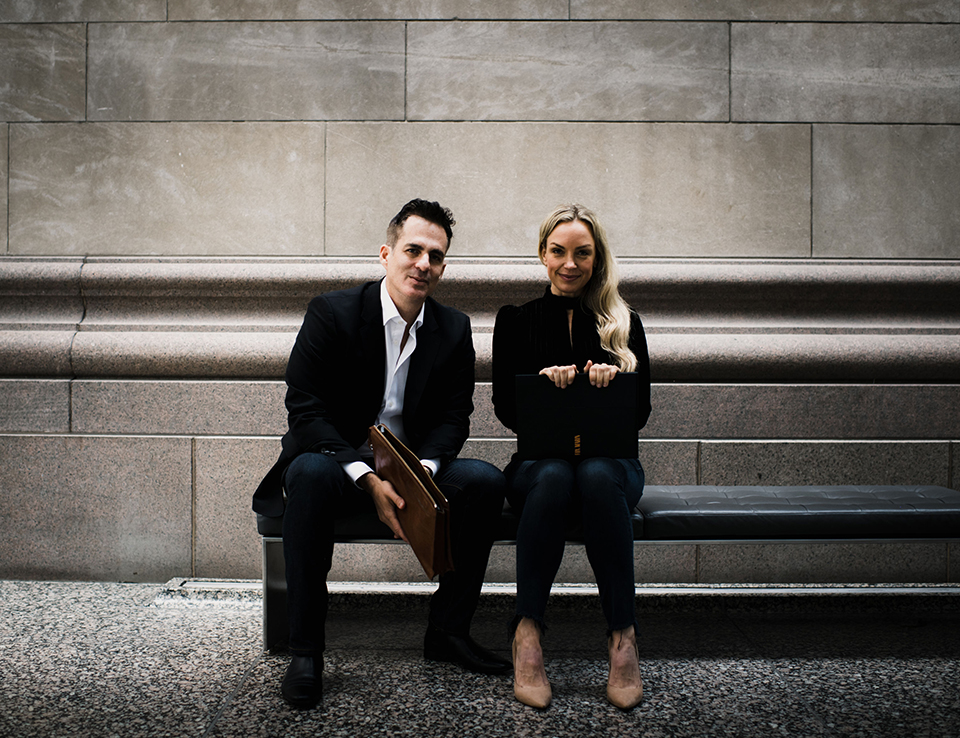
In this month’s Toronto Real Estate Podcast, Ralph Fox and Kori Marin take a closer look at October’s numbers, what they tell us about the market’s direction, and what buyers and sellers should consider as we head toward the final months of 2026.
Watch the Full Episode
If reading isn’t your thing, press play. In this episode, Ralph Fox, Co-founder and Broker of Record, and Kori Marin, Co-founder, share what they’ve learned from working with hundreds of Toronto buyers and sellers.
Key Takeaways
The average selling price in the City of Toronto was $1,075,627 in October 2026, up 0.5 percent year over year, while the MLS Home Price Index benchmark for the city fell 3.6 percent.
GTA home sales fell 7.9 percent, and new listings fell 11.9 percent in October 2026, so buyers and sellers stepped back at the same time.
Eight Toronto districts beat the city benchmark in October 2026, led by Davisville and Yonge and Eglinton at plus 3.2 percent, while Bathurst Manor fell 11.8 percent.
Downtown condo buyers had 5.1 months of inventory to choose from in the west core (C01) and 7.2 months in the east core (C08) in October 2026.
Ralph Fox and Kori Marin both expect three to six more months of a slow, sideways market, with a modest lift possible in spring 2027.
How Did Toronto’s Real Estate Market Perform in October 2026?
Prices were roughly flat, and sales volume was lower. The Toronto Regional Real Estate Board’s October 2026 Market Watch reported 5,603 sales across the GTA, down 7.9 percent from October 2025. New listings fell 11.9 percent to 14,173, and active listings fell 10 percent to 25,098, leaving 4.6 months of inventory. The City of Toronto accounted for 2,184 of those sales.
The two headline price measures pointed in opposite directions. An average price moves with the mix of what sold, so a month with more detached houses and fewer condos pushes it up without a single home being worth more. The Home Price Index benchmark tracks a typical home and is the steadier guide. Asked which matched what she saw on the ground, Marin picked the benchmark without hesitating. Fox agreed and used a comparison any Toronto agent will recognize: “It really felt like July.” He added that August was nearly as busy for the team as October.
Semis were the only category up in both sales and price. Marin’s summary of the month was short. “It’s not like the market’s crashing; it’s not going up,” she said. “It just is what is is.” Last month’s instalment Toronto Real Estate Market September 2026: Stuck in Neutral, reached the same conclusion.
Fox added one more factor he hasn’t heard many mention. Several clients told him they were holding off on decisions until after the U.S. midterm elections, even though the vote took place in another country.
As a result, many of Fox Marin’s selling clients chose to skip the fall and plan for spring 2027. That shows up in the data as fewer new listings and explains why inventory is shrinking even with sales down. Marin’s read is that the rush for the exits is over. Owners who needed to sell have mostly sold, and the rest have decided to hold. The standoff this creates between buyers and sellers is the subject of Nobody’s Budging: Inside Toronto’s Fall Real Estate Standoff.
Wondering what this means for your real estate plans? Let’s talk about what’s happening in your corner of Toronto, what opportunities could be worth exploring, and whether now is the right time to make a move. Contact Us (We’re Nice). Good advice is always in season.
Which Toronto Neighbourhoods Are Holding Their Value?
Eight districts beat the city’s 3.6 percent benchmark decline in October 2026, and four were up. Most are established central, midtown, and lakeshore neighbourhoods.
C10
Davisville, Mount Pleasant, Yonge and Eglinton
+3.2%
W06
Mimico, New Toronto, Long Branch, Alderwood
+1.2%
W07
Stonegate, Sunnylea, The Queensway
+0.4%
C11
Leaside, Thorncliffe Park, Flemingdon Park
+0.2%
E02
The Beaches, Woodbine Corridor, East End Danforth
-0.2%
C09
Rosedale, Moore Park
-0.5%
E01
Leslieville, Riverdale, Greenwood-Coxwell
-0.8%
C02
The Annex, Yorkville, Casa Loma, Summerhill, Wychwood
-0.8%
Two east-end districts are in seller’s-market territory. E01 had 2.4 months of inventory in October, with the average home selling in 13 days for 106 percent of asking. E02 had 2.3 months of inventory, with homes selling in 17 days for 104 percent. Marin said nearly every Fox Marin listing in E01 this year sold within a week, typically after 40 to 50 private showings and open houses that drew 50 to 100 people. Semis in both districts average around $1.2 million.
“There’s a lot of buyers out there. They’re like, is the market down? Because I’m still competing with five other people to get my hands on a semi-detached house in North Riverdale.” – Kori marin, Co-founder, Fox Marin
Marin was also frank about who is buying in these areas. Owners tend to have secure jobs and much equity, and younger buyers usually have family help. A quarter-point change in mortgage rates does not move the needle much for them.
Fox argues:
“There is no such thing as a Canadian real estate market. Real estate is very, very localized.” – Ralph Fox, Co-founder and Broker of Record, Fox Marin
He treats the past few years as a stress test. In his view, districts that held through the downturn are likely to recover first and most aggressively, though he is clear this is an expectation, not a guarantee.
Where Are Toronto Prices Still Falling?
The steepest declines in October 2026 were in Scarborough and parts of North York. Seven districts fell more than York Region, where the benchmark was down 6.8 percent.
C06
Bathurst Manor
-11.8%
E08
Scarborough Village, Guildwood, Cliffcrest, Eglinton East
-9.4%
E06
Birchcliffe-Cliffside, Oakridge
-9.3%
E11
Malvern, Rouge
-8.8%
E04
Dorset Park, Kennedy Park, Wexford
-8.3%
E09
Woburn, Bendale, Morningside
-8.0%
C13
Don Mills, Parkwoods, Victoria Village
-7.9%
Fox Marin does not work in most of these areas day to day, and Fox said so on the podcast. Marin had one recent example, a renovated and staged house on a ravine lot in Cliffcrest. “Everyone loved the home,” she said. “We just could not get buyers there to put pen to paper.” She believes the hesitation was about matching the price to the location, and that the same house in North Riverdale or Playter Estates would have sold almost immediately.
For buyers who care more about space than postal code, these districts are where sellers have the least leverage.
Have Downtown Toronto Condos Found Their Floor?
The average price indicates they could have, but it hides a lot. The average condo apartment in the City of Toronto sold for $659,214 in October 2026, down 5.6 percent from a year earlier, with 10.7 percent fewer sales. Marin’s chart of the past year shows the average has moved within a band of about $42,000 for the last 10 months. A line that runs sideways for that long usually means a segment is stabilizing.
Fox raised two problems with that reading. The condos selling are mostly larger two-bedrooms and lofts, which pulls the average up while studios and one-bedrooms keep struggling. The average only counts what sold. It says nothing about tenanted, investor-owned units on the market that may not sell at all.
“Condos are selling. It’s just the ones that are actually livable and the desirable ones. Everything else is really struggling.” – Ralph Fox, Co-founder and Broker of Record, Fox Marin
TRREB’s benchmark supports his caution. The index was down 7.4 percent in C01 and 70 percent in C08 in October 2026, both worse than the city overall.
Downtown Toronto condos, October 2026
Downtown West (C01)
Downtown East (C08)
Active listings
1,105
823
Months of inventory
5.1
7.2
Median price
$605,000
$545,000
Sale price to list price
96%
97%
C01 covers King West, the waterfront, Fort York and Liberty Village. C08 covers St. Lawrence Market, the Distillery District, the Canary District and Corktown. The choice is narrower than the listing counts suggest. Fox estimates that 70 to 80 percent of what is listed in C01 is tenanted or not somewhere most people would want to live. Both Ralph and Kori agree that if advising buyers, C08 is where they would look first, given the lower median and extra room to negotiate.
Marin reminded first-time buyers that the minimum down payment on a purchase of $500,000 or less is 5 percent and that good units are available under that price. The FM Mortgage Calculator shows what the monthly payments look like. Fox’s longer-term case is about supply. He expects the pipeline of newly completed condos to dry up after the first half of 2027 and stay thin for the next decade. By his numbers, a resale unit at $850 to $900 a square foot compares with a replacement cost near $1,400. That is his view of the opportunity, not a forecast of where prices go.
How Wide Is The Gap Between the 416 and the 905?
It is wide. Detached sales rose 0.5 percent in the City of Toronto and fell 6.2 percent in the 905. Semi-detached sales rose 1.5 percent in the city and fell 15.7 percent in the 905. Marin put the 905’s average price decline at about 5 percent compared with the city’s 0.5 percent gain.
Fox sees it as the unwinding of a pandemic trade. Buyers paid premiums to leave the city for more space amid COVID. In some suburban condo buildings, the price per square foot climbed to match downtown. Those premiums are coming back out. He called his conclusion a generalization since some 905 pockets will beat the average, but he believes a strong location holds value better than a discount earned by giving one up.
What This Means For You
If you’re a buyer, your leverage depends on what you are buying. In downtown condos and the outer east end, you can negotiate. Marin expects that to improve through winter when fewer buyers are looking. For a semi in E01 and E02, plan for competition and get your financing settled before you start booking showings.
If you’re a seller, price based on the last 30 to 60 days of sales in your district. Marin was blunt about expectations: “Nothing sexy is gonna happen. You’re not gonna get a record-breaking sale.” Waiting for spring makes sense for most owners. The exception she flagged is a well-prepared house listed in January, February or March when it can be the only new listing of its kind. Fox’s warning applies in any month: “The days of let’s just put it out on the market and see what happens, long, long, long gone.” Fox Marin’s Selling Page explains how we prepare a listing.
Suppose you’re watching from the sidelines. Follow months of inventory and the benchmark price for the two or three districts you care about and ignore the citywide average. For more on why so many people are waiting, ready Why Toronto Buyers Are Frozen Heading Into 2027.
Frequently Asked Questions
Months of inventory is the time it would take to sell every active listing at the current pace of sales, with no new listings added. TRREB reported 4.6 months for the GTA in October 2026. Typically, under four months favours sellers and above six months favours buyers.
The minimum down payment in Canada is 5 percent on a purchase price of $500,000 or less, which works out to $25,000 on a $500,000 condo. Any down payment under 20 percent requires mortgage default insurance, and the premium is usually added to the mortgage.
Winter usually gives Toronto buyers more negotiating room than spring or fall, because fewer buyers are active. Kori Marin of Fox Marin made that point about the months after October 2026, when downtown condo districts already had 5.1 to 7.2 months of inventory. The trade-off is fewer new listings to choose from.
Semi-detached homes are the entry point to a house for many Toronto first-time and move-up buyers, so demand stays steady when other segments slow. In October 2026, the average semi in the City of Toronto sold for $1,225,229, up 0.5 percent from a year earlier, and sales rose 1.5 percent.
The City of Toronto and the 905 refers to the surrounding regions of Halton, Peel, York and Durham, all named for their original telephone area codes. In October 2026, detached sales rose 0.5 percent in the 416 and fell 6.2 percent in the 905.
The Fox Marin Perspective
So, was October a trick or treat for Toronto real estate? As is often the case in this city, it depends on your postal code and what you’re looking to achieve.
Going forward, we don’t expect any dramatic plot twists. Ralph anticipates another three to six months of sluggish activity and continued economic uncertainty, particularly around Canada’s trade relationship with the United States. Kori is a little more positive about spring 2027, although we’re talking about a modest improvement in activity rather than a sudden return to bidding wars and packed open houses. We explored the bigger picture in When Will Toronto Real Estate Recover? The Cast for 2028, and our thinking hasn’t changed much.
But here’s the thing about Toronto real estate: the market doesn’t move in unison, and it certainly doesn’t read the headlines. A well-located semi in Riverdale can attract multiple offers while a downtown condominium struggles to find its buyer. Both can happen in the same week, in the same city, under the same interest rates. That’s why we’re far more interested in what’s happening on your street, in your building, and within your particular price range than in any sweeping predictions about where the market is headed.
For some buyers, this may be one of the more interesting opportunities we’ve seen in years. For some sellers, patience could prove more valuable than a fresh coat of paint and a For Sale sign. The trick is knowing the difference, and that’s where experience, preparation, and a little perspective go a long way.
If you’re wondering what October’s numbers actually mean for your next move, we’d be happy to talk it through. Contact Us (We’re Nice).
Stay Curious. Stay Informed.
The Toronto real estate market is always evolving. Whether you’re buying, selling, investing, or simply keeping an eye on what’s happening in the city, we’re here to help you make sense of it.
Explore more of our insights, market commentary, and conversations about Toronto real estate.
Good real estate decisions start with good conversations. Whether you’re preparing for your next move or just exploring your options, we’d love to hear from you. Contact Us (We’re Nice).
Fox Marin is recognized as one of Toronto’s most trusted real estate teams, with 550+ five-star Google reviews, more than 1,000 successful transactions, and over $700 million in sales volume. (*Source: RE Stats Inc. / Loft47, Jan. 1, 2018 – Aug. 31, 2026)
—
This article was written by Ralph Fox, Broker of Record and Managing Partner here at Fox Marin Associates. Ralph is a Torontonian native who recognized from an early age that the most successful people in life apply long-term thinking to their investments, relationships, and life goals. It’s this philosophy, along with his lifelong entrepreneurial drive and exceptional business instincts, that help to establish Ralph as a top agent in the real estate market in downtown Toronto.
Ralph Fox & Kori Marin
Kori and Ralph's love affair with Toronto Real Estate have spanned several decades! It is incredible to see how far their mad crazy passion for design, architecture and innovation has taken them, which is only the beginning of their bigger vision and relentless goal-setting! Kori and Ralph have created this forum for their readers to explore the good, the bad, and the sometimes ugly real estate. An honest perspective about the ins & outs of the business - one in which they live, work and experience first hand every day. Nothing is more interesting than the "real" in real estate!