People asking where Toronto, Canada is located are usually staring at a map of North America, trying to orient themselves to that stretch of shoreline along the northwestern edge of Lake Ontario. Many relocating professionals from the United States search for Toronto, Canada zip codes when trying to understand the city. In Canada, however, the correct term is postal code: Canadian postal codes use six letter and numbers rather than the five-digit ZIP codes used in the United States. The city sits relatively close to the US border, which is a big reason it’s become such a significant hub for cross-border commerce and corporate relocation.
Understanding the layout of this region matters a lot before you start a property search. The housing market spans everything from dense downtown high-rises to spacious detached homes spread across the surrounding metropolitan area, and figuring out the right spot comes down to balancing commute times, property types, and budget.
Geographic Layout and Boundaries
Toronto sits on the northern shore of Lake Ontario, which gives it miles of waterfront along its southern edge and makes it the anchor for a massive urban corridor in central Canada.
What surprises a lot of buyers when they first look at a map is how far the urban footprint actually extends. The layout pushes northward, eastward, and westward from the lake, pulling in a large network of interconnected municipalities that most people outside the region wouldn’t immediately associate with Toronto.
The City Versus the Greater Toronto Area
Real estate professionals and residents draw a hard line between the City of Toronto proper and the Greater Toronto Area – widely known as the GTA. The City of Toronto refers to the central municipal boundary, which takes in the downtown core and several immediately adjacent historic boroughs.
The GTA covers a much wider radius of surrounding commuter towns and suburban districts. Buyers who want larger lot sizes or different price points tend to look outward into the broader GTA. Those who need immediate access to the central commercial districts usually stay strictly inside the city limits. It’s not a better-or-worse conversation – it’s a priorities conversation.
Where Should You Actually Live in Toronto?
Knowing where Toronto is on a map is the easy part. Choosing where to live is where things get interesting.
For someone relocating to Toronto, the right neighbourhood usually comes down to three things: where you need to be during the week, how you want to spend your weekends, and what kind of property you actually want to come home to.
A young professional working downtown may prioritize a neighbourhood with a short subway commute and a walkable collection of restaurants, cafes and shops. A family may care more about schools, parks, lot sizes and access to the highway or GO Transit. Someone moving from New York, London or another major city may be surprised by how dramatically the character of Toronto changes from one neighbourhood to the next.
This is where the distinction between Toronto and the broader GTA becomes particularly important. At Fox Marin, we regularly help buyers understand not just what a property costs, but how a neighbourhood will work with their day-to-day life. Leslieville, Riverdale, the Danforth, the Annex, High Park, Trinity Bellwoods, Yorkville, Summerhill and Rosedale can all feel like completely different cities despite being part of the same municipality.
If you’re relocating, don’t start with a postal code or a property search. Start with your priorities. Once you know how you want to live, the right part of Toronto because much easier to identify.
Commuting and Local Transportation
Getting around the region involves a mix of major multi-lane highways and an extensive public transit network. Commute times vary widely depending on your starting point and daily destination – and I mean widely.
Traffic generally flows toward the downtown core in the morning and back out toward the GTA in the evening. Before you commit to a specific neighbourhood, map out your actual daily drive or transit ride. Crossing the city during peak hours adds substantial time, and “close on a map” doesn’t always translate to “close in real life.”
Highways and Public Transit
The regional highway system connects the downtown core to the outer edges of the GTA and down toward the US border. Buyers who drive daily often make highway access one of their first filters when evaluating a neighbourhood – for good reason.
For those who’d rather leave the car at home, the city runs a large public transit system covering subways, streetcars, and buses. Regional commuter trains also bring residents in from outer GTA municipalities directly into the city centre. Living outside the city limits while working downtown is entirely workable, and for a lot of buyers it’s the move that makes the numbers pencil out.
The Local Housing Market
The real estate landscape here offers a wide range of options, and buyers should expect a consistently active market. Since specific 2026 market data fluctuates, working with a local professional is the practical way to get exact median prices for any given neighbourhood.
Location drives property values across the region more directly than almost any other factor. Homes close to the downtown core or along the Lake Ontario waterfront generally carry a premium. Move further out into the GTA, and you’ll typically get more square footage for the same budget – that trade-off sits at the centre of most buyer decisions here.
Common Property Styles
Downtown, the skyline tells you what to expect: high-rise condominium towers dominate, and they’re often where first-time buyers and investors start because the entry price is lower. Those units generally come with modern amenities and put you within walking distance of major employment centres.
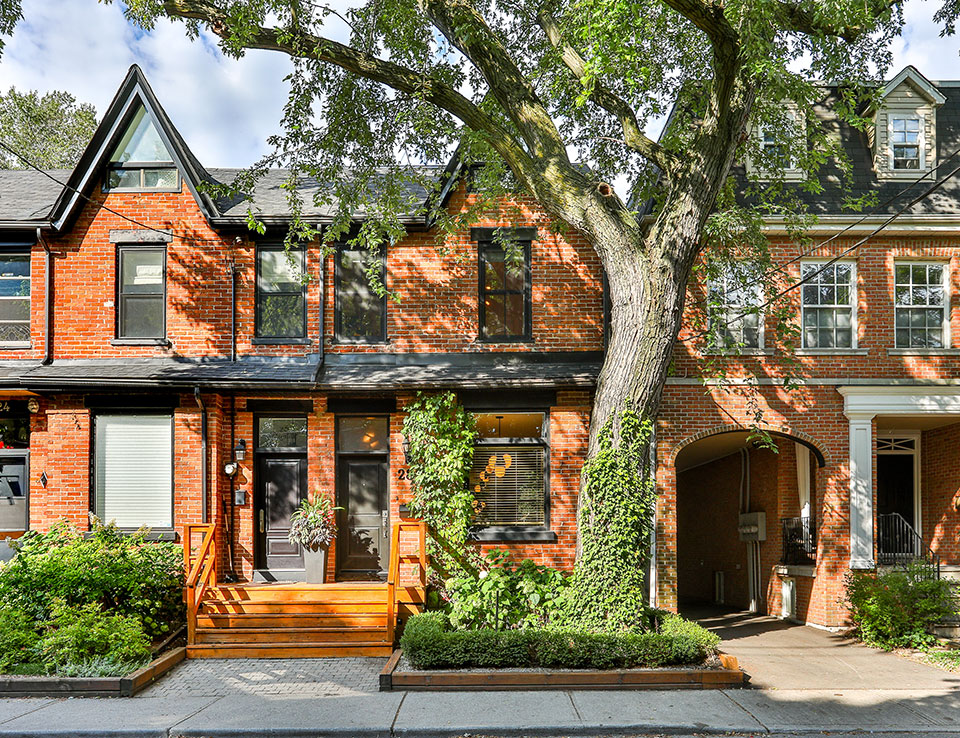
Further from the city centre, the housing stock shifts – townhomes, semi-detached, and fully detached houses become the norm. Older neighbourhoods have historic brick homes and mature trees. Newer developments in the outer GTA lean toward larger, contemporary suburban builds. It’s a genuinely different feel, and some buyers don’t realize how different until they spend a weekend driving through both.
Lifestyle and Everyday Amenities
Daily life here revolves around distinct local districts, each with its own mix of retail, dining, and public spaces. The layout places commercial centres close to residential streets, which keeps most routine errands short. That’s easy to underestimate until you’ve lived somewhere where it isn’t the case.
The proximity to Lake Ontario is a real advantage. Waterfront trails and public beaches run along the southern edge of the city, putting outdoor recreation within reach without leaving the urban environment entirely.
Parks and Commercial Districts
The city maintains numerous public parks, ravines, and green spaces throughout the residential areas – walking trails, sports facilities, playgrounds – which does a lot to break up the density of the built environment.
Shopping and dining are spread across multiple commercial corridors rather than funnelled into a single downtown district. For most residents, that means grocery stores, cafes, and local businesses sit within a short distance from home. It’s a more decentralised layout than some buyers expect, and most people come to appreciate it quickly.
Frequently Asked Questions
Where is Toronto, Canada located relative to the US border and other major real estate markets?
Toronto sits on the northwestern shore of Lake Ontario, making it relatively close to the US border. It functions as the primary real estate and economic hub in central Canada, connecting easily to other major North American markets via highway and air travel.
What is the geographic difference between buying a house in the City of Toronto versus the Greater Toronto Area (GTA)?
The City of Toronto refers to the specific central municipal boundary, including the downtown core. The Greater Toronto Area (GTA) includes the city plus a massive surrounding ring of suburban municipalities and commuter towns.
Can a US citizen or non-resident legally buy a house in Toronto, Canada?
Not necessarily. Canada’s federal Prohibition on the Purchase of Residential Property by Non-Canadians Act currently restricts many non-Canadians from purchasing residential property in Canada, including in Toronto. The federal prohibition has been extended through January 1, 2027.
There are important exceptions. Certain temporary residents, protected persons, and non-Canadians purchasing with an eligible Canadian spouse or common-law partner may qualify, and additional exceptions can apply in specific circumstances, including certain development purchases. The rules are detailed and eligibility depends on your immigration status, the type of property and other factors.
If you’re planning a move to Toronto from the United States or elsewhere, it is important to determine your eligibility before assuming you can purchase. For many relocating buyers, renting first can be a practical way to understand the city and its neighbourhood while immigration, financing and purchasing eligibility are sorted out.
Are there extra municipal land transfer taxes for properties located strictly within Toronto city limits?
Yes. Buyers purchasing property within the City of Toronto generally pay Toronto’s Municipal Land Transfer Tax in addition to Ontario’s provincial Land Transfer Tax. The municipal tax does not apply to purchases outside the City of Toronto.
What are the best affordable commuter towns located just outside of Toronto, Canada?
Affordability depends on your exact budget and commute tolerance. Buyers seeking lower prices often look to the outer edges of the Greater Toronto Area (GTA), where regional transit trains provide direct access back into the city centre.
Does buying a waterfront home on Lake Ontario in Toronto come with hidden flood insurance costs?
It depends on the exact elevation and zoning of the property. Buyers looking at waterfront homes along Lake Ontario should always request insurance quotes during the inspection period to verify if specialised flood coverage is required.