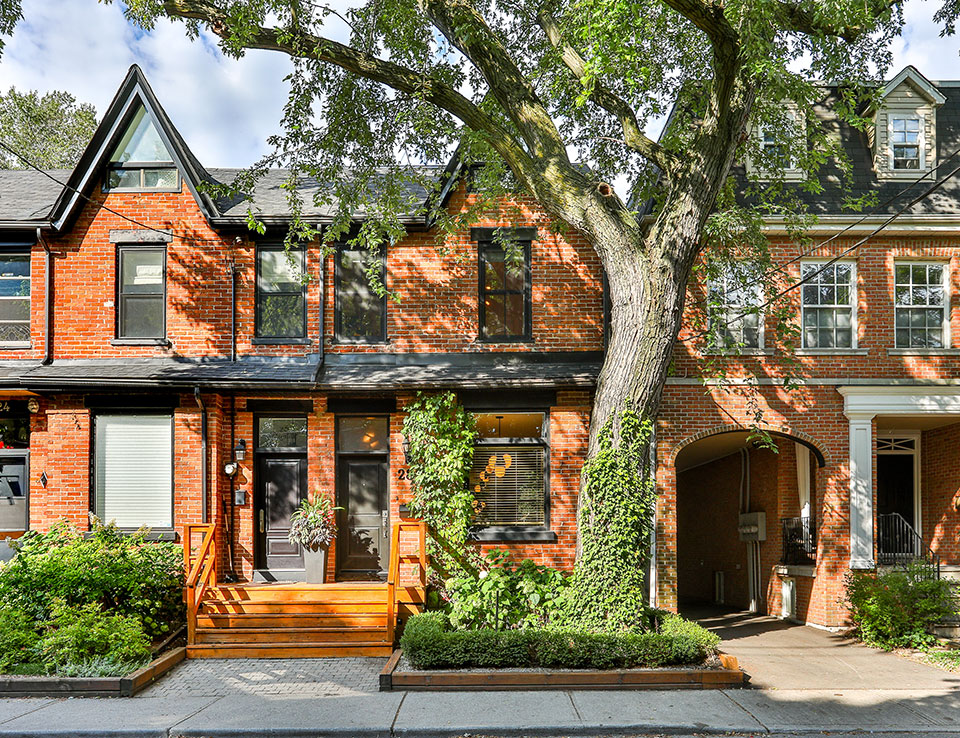
How to Choose the Right Toronto Neighbourhood: A Relocator’s Guide to Finding Your Place in the City
How to Choose the Right Toronto Neighbourhood
One of the biggest mistakes people make when relocating to Toronto is asking the wrong question.
They ask:
“What’s the best Toronto neighbourhood?”
The reality is there isn’t one.
Toronto is a city of neighbourhoods.
The best neighbourhood for a young professional working downtown may be completely wrong for a family with two children.
The best neighbourhood for someone who values nightlife may be different from the best neighbourhood for someone prioritizing schools, parks, and community.
The better question is:
“Which Toronto neighbourhood is right for me?”
That’s exactly what this guide is designed to help answer.
“Toronto really is a city of neighbourhoods,” says Jessica Spillas. “It’s why I love this city so much, because it feels like there’s a community to welcome everyone, regardless of where they come from or what they most resonate with.”
For newcomers, that can feel overwhelming.
Toronto contains dozens of distinct neighbourhoods, each with its own personality, housing stock, walkability, culture, schools, restaurants, parks, and lifestyle.
The good news is that you don’t need to know every neighbourhood.
You simply need to know how to identify the ones that fit you.
This guide will help you narrow the city’s many neighbourhoods into a shortlist that fits your lifestyle.
Watch the Full Episode
In this episode of the Fox Marin Relocation Academy, Ralph Fox is joined by Jessica Spillas and Sammy Marasco to discuss how newcomers should think about neighbourhood selection, lifestyle priorities, commuting, walkability, and finding the right fit in Toronto.
QUICK ANSWER: WHAT IS THE BEST TORONTO NEIGHBOURHOOD?
There isn’t one.
The best neighbourhood depends on your lifestyle, commute, family needs, housing preferences, budget, and long-term goals.
A neighbourhood that feels perfect for one person may feel completely wrong for another.
The goal is not to find the best neighbourhood.
The goal is to find the right Toronto neighbourhood for you.
The best neighbourhood in Toronto isn’t the one everyone talks about. It’s the one that fits the way you want to live.
Step One: Start With Lifestyle, Not Real Estate
This is the biggest lesson from the entire conversation.
Most people start with the property.
Before beginning a home search, many relocators find it helpful to understand the broader Buyer Experience and the advisory process behind successful moves.
Fox Marin recommends starting with the lifestyle.
Before looking at listings, ask yourself a few simple questions:
How do you spend your weekends?
How important is walkability?
Do you enjoy nightlife and restaurants?
Do you prefer parks and greenspace?
Do you want a backyard?
Do you want to be surrounded by families?
Do you want to walk to work?
Or do you want a quieter residential environment?
“Toronto really is a city of neighbourhoods,” says Jessica Spillas. “There’s a community to welcome everyone.”
That philosophy is one of the reasons Toronto works so well for newcomers.
The city offers an extraordinary variety of experiences.
The challenge isn’t finding a great neighbourhood.
The challenge is identifying which neighbourhood aligns with how you want to live.
That distinction is what separates successful relocations from frustrating ones.
Choose the lifestyle first. Choose the neighbourhood second. Choose the property third.
FOX MARIN PERSPECTIVE
We often see people fixate on a specific property before understanding how they want to live.
Six months after moving, clients rarely talk about square footage.
They talk about the coffee shops they visit every morning. The park they walk through with their dog. The restaurant they discovered around the corner. The neighbours they have met. The commute they no longer dread.
The neighbourhood experience often matters far more than people initially expect.
Step Two: Decide How You Want To Commute
One of the most important lifestyle decisions you’ll make is how you want to move through the city.
Toronto’s neighbourhoods can offer dramatically different commuting experiences.
If you’re working in finance, law, accounting, consulting, or another downtown profession, neighbourhoods connected to the PATH system may be worth considering.
“If you’re in the financial sector, the most obvious choice would probably be anything that’s connected to the PATH,” says Jessica Spillas.
Neighbourhoods surrounding the Financial District, Waterfront, CityPlace, and University District provide convenient access to major employment centres while reducing the need to commute during Toronto’s colder winter months.
For others, proximity to a subway station may matter far more than proximity to an office tower.
QUICK ANSWER: SHOULD I PRIORITIZE COMMUTE OR SPACE?
For most people, commuting wins.
A shorter commute often creates a better quality of life than additional square footage ever could.
Many relocators underestimate the cumulative impact of spending an extra hour commuting each day, especially in a city like Toronto.
Fox Marin Perspective
A fifteen-minute shorter commute can dramatically improve quality of life.
People rarely regret reducing their commute.
They often regret underestimating it.
Step Three: Decide What Type Of Housing You Want
Neighbourhood selection and housing selection are deeply connected.
One of the first questions every relocator should ask themselves is what type of home best supports their lifestyle.
For readers deciding between leasing and ownership, our guide to Renting vs Buying When Relocating explores the advantages of each approach.
For many newcomers, condominium living is the natural starting point. Condos tend to appeal to young professionals, first-time buyers, and relocators who prioritize walkability, convenience, and access to transit. Living in a condominium often means being closer to restaurants, entertainment, employment centres, and public transportation.
Others may be drawn to townhomes or low-rise housing. Couples, growing families, and buyers seeking additional space often gravitate toward these options because they strike a balance between urban living and residential comfort.
For families planning to put down roots, detached and semi-detached homes remain highly desirable. These properties offer more space, private outdoor areas, and greater flexibility, but they often require compromises around budget, commute times, or proximity to downtown.
For luxury buyers, neighbourhoods such as Rosedale and Forest Hill continue to represent some of Toronto’s most prestigious addresses.
“Rosedale is very much old Toronto,” says Ralph Fox. “You have these large character homes on large lots, mature trees, and incredible access to downtown.”
Readers interested in Toronto’s most prestigious communities can also explore our Luxury Real Estate resources.
Step Four: Match Your Neighbourhood To Your Stage Of Life
Different neighbourhoods attract different people.
The key is understanding where you fit today.
Not necessarily where you think you should fit.
YOUNG PROFESSIONALS
For young professionals, energy and convenience often take priority.
Jessica Spillas points to the Financial District, Waterfront, and King West as common destinations.
Ralph Fox adds that King West and Liberty Village tend to attract young professionals, first-time buyers, and first-time renters.
What makes these neighbourhoods appealing isn’t just the housing.
These neighbourhoods offer a unique blend of galleries, independent retailers, restaurants, creative businesses, and cultural activity.
Jessica Spillas also highlights The Junction.
Historically, The Junction became a haven for artists because housing costs were significantly lower than in other parts of the city. That creative DNA still exists today.
One of the most interesting aspects of Toronto is how neighbourhood identities evolve.
Areas that were once considered fringe often become some of the city’s most desirable destinations.
Understanding where a neighbourhood has been can often provide clues about where it’s going.
FAMILIES
Families tend to evaluate neighbourhoods differently from young professionals or first-time buyers.
While restaurants and nightlife may still matter, schools, parks, community, safety, and walkability often move to the top of the priority list.
The ability to walk children to school, spend weekends at a nearby park, or connect with other families in the neighbourhood can have a significant impact on day-to-day quality of life.
Sammy Marasco frequently recommends High Park, Roncesvalles, Riverdale, and Playter Estates for their strong sense of community and family-oriented amenities.
“You’ve got the park right there that anchors the space,” says Marasco.
She recalls attending an open house in Roncesvalles during Halloween.
“Every single family was out in their front yard. There were DJ booths, treats, and people everywhere. It was incredibly community-driven.”
Ralph Fox points to Playter Estates and Riverdale as additional family favourites.
For many families, the neighbourhood itself becomes the amenity.
The ability to walk to schools, libraries, parks, playgrounds, and local businesses often becomes more valuable than an extra bedroom or larger lot.
Strong neighbourhoods reveal themselves through community participation.
The Waterfront Reality Check
One of the most valuable insights from the conversation concerns Toronto’s waterfront.
Many newcomers fall in love with it immediately.
And understandably so.
The views. The walkability. The restaurants. The entertainment. The connection to the lake.
But Ralph Fox offers an important caution.
“The experience you have in July may be very different from the experience you have in January.”
Toronto’s waterfront can feel dramatically different during the winter months.
The lesson is simple.
A neighbourhood you love in July should also be a neighbourhood you can imagine living in during February.
Walk The Neighbourhood
This may be the most important advice in the entire article.
“I do have advice,” says Jessica Spillas. “Walk everywhere.”
“The experience that you have on foot is so indicative of how a neighbourhood feels and behaves.”
“You cannot get that same experience by driving around in your car.”
When evaluating a neighbourhood, spend time experiencing it the way you would actually live in it.
Walk the streets. Visit local coffee shops. Spend time in the parks. Observe who is using public spaces. Pay attention to the pace of life. Notice how connected you feel to the area.
These observations often reveal far more than any online search, map, or statistic ever could.
You cannot truly understand a neighbourhood through a windshield.
Fox Marin Perspective
Toronto rewards people who explore before making a decision.
The most successful relocators spend time getting to know neighbourhoods before committing to one.
What We’re Seeing Right Now
At Fox Marin, we’re seeing a noticeable shift in how people approach neighbourhood selection.
Five years ago, many buyers focused primarily on maximizing space.
Today, the convenience is different.
Walkability matters more. Neighbourhood character matters more. Transit access matters more. Community matters more.
People are increasingly willing to trade some square footage for a shorter commute, stronger community connections, or a more vibrant lifestyle.
“The happiest clients aren’t necessarily buying the largest home,” says Ralph Fox. “They’re finding neighbourhoods that align with how they want to live.”
Final Thoughts
There isn’t a single best neighbourhood. The right neighbourhood depends on your lifestyle, commute, housing preferences, budget, and long-term goals.
High Park, Roncesvalles, Riverdale, Playter Estates, Davisville, The Annex, and Leslieville are among Toronto’s most popular family-oriented neighbourhoods.
King West, Liberty Village, the Financial District, Queen West, and Midtown Toronto are popular among young professionals.
Neighbourhoods such as Yorkville, King West, Queen West, The Annex, Roncesvalles, and Leslieville are known for their walkability.
Downtown Toronto is ideal for people prioritizing walkability, transit access, employment opportunities, and an urban lifestyle.
For many people, yes. The Waterfront offers excellent views, walkability, entertainment, and access to downtown. However, it’s important to consider how the area feels during winter months as well as summer.
Many residents living in central neighbourhoods do not own a vehicle. Transit, walking, cycling, and ride-sharing often provide sufficient transportation options.
For more relocators, the commute has a greater impact on quality of life than additional square footage.
Queen West, Ossington, Geary Avenue, and The Junction continue to attract creative professionals.
Many relocators benefit from renting first, particularly if they are unfamiliar with Toronto.
For more people, the neighbourhood has a greater impact on long-term satisfaction than the property itself.
Walk it. Spend time there. Visit local businesses. Explore the parks. Talk to residents. Experience the neighbourhood the way you would actually live in it.
Toronto truly has a neighbourhood for everyone.
The challenge isn’t finding the best neighbourhood.
The challenge is finding the right neighbourhood.
As Jessica Spillas put it:
“There’s a community to welcome everyone.”
Take the time to explore. Walk the streets. Visit the parks. Talk to residents. Experience the city.
The more effort you put into understanding Toronto’s neighbourhoods, the more likely you are to find the version of Toronto that feels like home.
And ultimately that’s what this process is all about.
Looking for more Toronto real estate insights, leasing advice, and market updates from the Fox Marin team? Explore the latest blogs and podcasts episodes for in-depth analysis, neighbourhood insights, and conversations about where the market is headed next:
Fox Marin continues to be one of Toronto’s most recognized downtown real estate teams, with more than 550 five-star Google reviews, over 1,000 successful transactions, and more than $700 million in sales volume. (*Source: Jan. 1, 2018 – Aug 31, 2026, RE Stats Inc.)
—
This article was written by Ralph Fox, Broker of Record and Managing Partner here at Fox Marin Associates. Ralph is a Torontonian native who recognized from an early age that the most successful people in life apply long-term thinking to their investments, relationships, and life goals. It’s this philosophy, along with his lifelong entrepreneurial drive and exceptional business instincts, that help to establish Ralph as a top agent in the real estate market in downtown Toronto.
Ralph Fox & Kori Marin
Kori and Ralph's love affair with Toronto Real Estate have spanned several decades! It is incredible to see how far their mad crazy passion for design, architecture and innovation has taken them, which is only the beginning of their bigger vision and relentless goal-setting! Kori and Ralph have created this forum for their readers to explore the good, the bad, and the sometimes ugly real estate. An honest perspective about the ins & outs of the business - one in which they live, work and experience first hand every day. Nothing is more interesting than the "real" in real estate!