Cost of Living in Toronto: What It Really Costs to Live, Rent, and Buy in Canada’s Largest City
If you’re considering a move to Toronto, one of the first questions you’ll likely ask is simple:
What is the cost of living here?
It’s a fair question.
Toronto has developed a reputation as one of the most expensive cities in Canada. Headlines frequently focus on housing affordability, rising rents, home prices, and the challenges many residents face in entering the market.
At the same time, Toronto continues to attract people from across Canada and around the world.
Professionals relocate here for career opportunities. Entrepreneurs move here to build businesses. Families come for schools, healthcare, safety, and quality of life. International newcomers arrive seeking stability, opportunity, and a place to build a future.
The reality is that Toronto is expensive.
But it is also nuanced.
The answer depends heavily on where you’re coming from, what type of lifestyle you’re hoping to build, and whether you’re planning to rent or buy.
As Ralph Fox explains:
“Torontonians view Toronto as expensive, but compared to many major global cities, we’re actually somewhere in the middle.”
That viewpoint often surprises people.
For some relocating from Montreal, Halifax, Winnipeg, Edmonton, Calgary, Ottawa, or many smaller Canadian cities, Toronto can feel dramatically more expensive.
For someone arriving from New York, San Francisco, Los Angeles, London, Hong Kong, or Singapore, Toronto may occasionally feel surprisingly affordable.
Context matters.
Watch the Full Episode
“Housing costs are the single largest driver of affordability for most people moving to Toronto.” — Reuben Labovitz
Toronto Is Expensive. But Compared To What?
One of the most interesting aspects of Toronto’s affordability conversations is that it depends entirely on your frame of reference.
Nationally, Toronto consistently ranks among Canada’s most expensive cities.
That shouldn’t come as a surprise.
Housing costs are higher. Land is scarce. Competition is fierce. Demand remains strong.
But when viewed through a global lens, Toronto often lands somewhere in the middle of the pack among major world cities.
That doesn’t necessarily make Toronto affordable.
What it means is that many people arriving from major international cities are often surprised by how much more housing they can buy here than in some of the world’s most expensive urban centres.
Meanwhile, Canadians arriving from lower-cost markets often experience significant sticker shock.
This is particularly true when it comes to housing.
Regardless of how Toronto compares globally, housing remains the single largest expense newcomers will face.
Real Toronto Rental Costs
For many people relocating to Toronto, renting is the first step.
Whether you’re moving from another Canadian city, relocating from the United States, or arriving from abroad, renting can provide flexibility as you learn the city and determine where you’d ultimately like to live.
The good news is that Toronto offers rental options across a wide range of budgets.
The challenge is that those budgets are often higher than many newcomers expect.
Today, a quality one-bedroom condominium in central Toronto will typically rent for approximately $2,500 per month.
For many newcomers, this becomes the baseline entry point into Toronto’s rental market.
People seeking additional space often look at two-bedroom units.
A functional two-bedroom condominium with two legitimate bedrooms and two bathrooms will generally fall between $3,200 and $4,000 per month, depending on location, building quality, and amenities.
Applicants seeking freehold housing face another cost increase.
A semi-detached home in many desirable Toronto neighbourhoods typically starts at around $4,500 per month, with many properties renting for considerably more.
Detached homes frequently range from $6,000 to $10,000 per month, particularly in highly sought-after neighbourhoods.
Luxury rentals occupy an entirely separate category.
A premium condominium residence in Yorkville may command $5,000 to $8,000 per month or more, while luxury freehold homes in neighbourhoods such as Rosedale, Forest Hill, and Summerhill can easily exceed $10,000 to $20,000 per month.
For many newcomers, homeownership remains the ultimate goal.
The good news is that, despite Toronto’s reputation, there are still entry points.
Today’s market looks very different from what it did just a few years ago.
Entry-level condominium ownership is still possible, with certain properties available in the $450,000 range.
These properties tend to be smaller units or located outside Toronto’s most competitive neighbourhoods, but they can serve as an important entry point into the market.
Buyers seeking greater long-term flexibility often begin their search in the $650,000 to $800,000 range.
A quality one-bedroom-plus-den condominium often falls within this category.
A functional two-bedroom, two-bathroom condominium in a desirable neighbourhood usually ranges from $800,000 to $1.2 million.
Once buyers begin exploring freehold housing, the number of buyers increases significantly.
Entry-level semi-detached homes in many central Toronto neighbourhoods often begin around $1.25 million to $1.5 million.
Larger, renovated, or better-located semi-detached homes frequently range from $1.5 million to $2.5 million.
Detached homes in Toronto’s most desirable neighbourhoods often begin around $2 million, with many exceeding that threshold by a considerable margin.
Luxury housing is its own category.
Today, many would argue that genuine luxury freehold real estate begins at around $3.5 million, particularly in Toronto’s most prestigious neighbourhoods.
This is one of the most common questions newcomers ask.
The answer comes down to a mixture of geography, policy, economics, and demand.
Ian Busher explains it simply:
“Toronto is effectively an island. We protected the Greenbelt, and now we have very little land left to build on.”
The Greenbelt was created to protect environmentally sensitive lands, farmland, and natural areas surrounding the city.
While successful from an environmental perspective, it has also constrained outward growth.
Toronto cannot simply continue expanding indefinitely.
As a result, land has become increasingly scarce.
At the same time, Toronto remains Canada’s largest economic engine.
Major employers, financial institutions, technology firms, healthcare organizations, universities, and cultural institutions continue to attract talent from across Canada and around the world.
Demand remains strong.
Supply struggles to keep pace.
The result is a market where land, housing, and development opportunities remain highly competitive.
Why Building Housing in Toronto Is Also Expensive?
Land scarcity is only one piece of the puzzle.
Building housing in Toronto has become more expensive. Construction costs have risen significantly over the past decade. Labour shortages, material costs, financing, municipal approvals, development charges, and regulations all add to the final cost.
In fact, approximately 30 percent of the cost of many newly built condominiums is attributable to various taxes, fees, charges, and government-imposed costs before a buyer ever receives the keys.
The reality creates a difficult environment for developers.
It takes years to bring new housing to market.
It costs millions of dollars to secure approvals.
And every layer of cost ultimately adds to the final purchase price.
As a result, housing supply struggles to keep pace with demand, particularly in Toronto’s most desirable neighbourhoods.
“Toronto is expensive, but there is also a tremendous amount of opportunity here.” — Ian Busher
While affordability difficulties are real, it is important to remember why demand remains so strong.
Toronto offers career opportunities, educational institutions, healthcare, safety, diversity, culture, and economic opportunity on a scale that few Canadian cities can match.
People continue moving here because they believe the opportunities outweigh the costs.
For many, they do.
The Hidden Costs Many Newcomers Miss
One of the biggest surprises for relocation clients is that the purchase price is often not the number that creates the most sticker shock.
It is everything that comes afterward.
Land transfer taxes. Legal fees. Moving expenses. Closing costs. Insurance. Furniture. Utility setup. Home inspections. Mortgage-related expenses.
Many newcomers focus on mortgage payments or rent without fully accounting for these extra costs.
The result can be an unpleasant surprise shortly before closing.
The Fox Marin Perspective
One of the most valuable exercises a newcomer can complete before arriving in Toronto is to create a comprehensive relocation budget.
Housing is only one component.
A comprehensive budget should include:
Housing costs
Closing costs
Moving costs
Transportation
Insurance
Utilities
Groceries
Childcare
Lifestyle expenses
A more complete plan leads to a smoother, more seamless transition.
The Double Land Transfer Tax
One of the most unique aspects of buying property in Toronto is something many newcomers have never encountered before.
Toronto buyers pay:
Ontario Land Transfer Tax Toronto Municipal Land Transfer Tax
This effectively creates a double land transfer tax.
The impact can be significant.
On a $1.6 million purchase, buyers may pay approximately $65,000 in land transfer taxes alone.
Unlike with a mortgage, these costs typically cannot be rolled into financing.
They are generally due in cash at closing.
For many buyers, this becomes one of the most important costs to budget for well in advance.
It is also one of the reasons many existing homeowners choose to renovate rather than move.
The transaction costs involved in upgrading can be substantial.
Transportation Costs
Housing may be the largest expense in Toronto, but transportation often ranks second.
The cost depends heavily on lifestyle and location.
Residents living in highly walkable neighbourhoods often spend considerably less than those who rely on vehicles.
Owning a vehicle in Toronto can involve:
Car payments
Insurance
Fuel
Parking
Maintenance
Licensing
Combined, those costs can easily exceed $1,000 per month.
For this reason, many residents choose neighbourhoods with excellent walkability and transit access.
This is one reason neighbourhood selection plays such an important role in overall affordability.
Where you live often determines how much you spend.
Groceries, Utilities, and Everyday Living
Beyond housing and transportation, newcomers should budget for day-to-day expenses.
Groceries have become a growing concern for many Canadians over the past several years.
While costs vary depending on family size and lifestyle, a single individual may easily spend several hundred dollars per month on groceries alone.
Utilities, internet, mobile phones, dining out, entertainment, fitness memberships, and personal spending all contribute to the overall cost of living.
The good news is that Toronto offers options across virtually every price point.
Whether you’re looking for premium dining experiences or affordable local restaurants, luxury fitness clubs or public recreation facilities, Toronto provides a remarkable range of choices.
The challenge is not finding options.
The challenge is creating a budget that matches your goals.
What Income Do You Need To Live Comfortably In Toronto?
This is perhaps the most common question newcomers ask.
The answer depends on lifestyle.
A single professional renting a one-bedroom condominium downtown will have very different financial requirements than a family purchasing a detached home in Midtown Toronto.
Research discussed during the episode suggests a single individual may need about $5,300 per month to comfortably cover living expenses in Toronto.
That figure includes:
Housing
Transportation
Utilities
Groceries
Leisure
Clothing
Restaurants
Miscellaneous expenses
For families, those numbers naturally increase depending on housing choices, childcare costs, and personal lifestyle choices.
The important takeaway is that Toronto rewards considered planning.
The more realistic your expectations are before arriving, the easier the transition tends to be.
Renting Before Buying
One of the strongest themes throughout the relocation process is the importance of having a plan.
For many newcomers, renting before buying can be an excellent strategy.
Reuben Labovitz explains:
“For many people, it makes sense to land, rent for six to twelve months, learn the city, and then buy.”
This approach allows newcomers to:
Learn Toronto’s neighbourhoods
Understand commute patterns
Explore school districts
Evaluate housing options
Build local knowledge
Most importantly, it helps avoid expensive mistakes.
As Ralph Fox notes:
“If you’re moving to a city like Toronto where real estate is expensive, it can be very costly to make a mistake.”
The more informed your decision becomes, the more likely you are to make the right long-term choice.
Readers considering this approach may also want to explore Fox Marin’s Renting in Toronto guide, Relocation Services and our Relocation Academy to better understand how different communities and housing options fit into a larger relocation strategy.
What We’re Seeing Right Now
One of the most interesting trends Fox Marin continues to observe is the diversity of people relocating to Toronto today.
Some are Canadians returning from abroad.
Others are moving from Vancouver, Calgary, Ottawa, Montreal, or smaller Ontario communities.
Many are arriving through corporate transfers.
Others are relocating internationally.
Increasingly, newcomers are taking a more planned approach.
Rather than rushing into ownership, they spend time learning the city before purchasing.
The common denominator of successful relocation was not about speed or timing.
It was having a plan and committing to a process.
“The common denominator was never timing. The common denominator was having a plan.” — Fox Marin Team
Frequently Asked Questions
Toronto consistently ranks among the most expensive cities in Canada, particularly for housing costs. Depending on market conditions, Toronto and Vancouver often compete for the top position.
The answer varies depending on the neighbourhood and housing type. Both cities are among Canada’s most expensive housing markets, though Toronto typically offers a larger, more diverse housing inventory.
A quality one-bedroom condominium in central Toronto will generally cost around $2,600 per month. Larger units and family-sized homes can increase significantly from there.
Entry-level condominiums can still be found around the $450,000 range, while many freehold homes in desirable central neighbourhoods begin around $1.25 million and rise considerably depending on location and property type.
A combination of strong demand, limited land supply, Greenbelt restrictions, development costs, population growth, and Toronto’s role as Canada’s economic centre contributes to housing prices.
Toronto buyers pay both Ontario Land Transfer Tax and Toronto Municipal Land Transfer Tax when purchasing property within the city limits.
The answer depends on lifestyle and housing choices. Many single professionals require approximately $5,000 to $6,000 per month after taxes to comfortably cover housing and everyday expenses.
Not necessarily. Many Toronto neighbourhoods are highly walkable and well served by public transit. Some residents rarely use a vehicle.
Generally speaking, yes. While Toronto is expensive by Canadian standards, many housing and lifestyle costs remain lower than major U.S. gateway cities such as New York, San Francisco, and Boston.
For many newcomers, yes. Renting for six to twelve months can give valuable insight into neighbourhoods, commuting patterns, schools, and living preferences before making a purchase.
Many buildings first occupied before November 15, 2018, are subject to Ontario’s rent control guidelines. Buildings occupied after that date are generally exempt from provincial rent increase limits.
Current federal regulations continue to restrict many foreign buyers from purchasing residential property in Canada. Buyer should seek professionals legal and tax advice to determine eligibility.
Your Relocation Journey
Understanding Toronto’s cost of living is only one part of an effective move.
The next step is understanding how that cost translates into lifestyle, neighbourhood choice, and long-term planning.
STEP-BY-STEP: RENTING IN TORONTO Everything newcomers need to know about Toronto’s rental market, tenant applications, rent control, and securing a lease.
TORONTO TAXES, RULES, AND REGULATIONS A deeper look at land transfer taxes, vacancy taxes, foreign buyer restrictions, ownership costs, and other regulations that newcomers should understand before purchasing property.
For additional guidance, readers can also explore:
Housing costs are high. Taxes can be significant. Transportation, childcare, groceries, and daily expenses add up quickly.
But focusing only on cost tells an incomplete story.
Toronto continues to attract people from around the world because it offers something many cities struggle to provide:
Opportunity.
Career opportunity. Educational opportunity. Entrepreneurial opportunity. Lifestyle opportunity.
The opportunity to build a life in one of the most diverse, dynamic, and economically important cities in North America.
As Ian Busher points out:
“Toronto is expensive, but there is also a tremendous amount of opportunity here.”
That balance is ultimately what newcomers are evaluating.
Not simply what Toronto costs.
But what Toronto offers in return.
And for many people, that equation continues to make sense.
“The best relocation decisions happen when people understand both the cost of living and the value of living here.” — Ralph Fox
The most successful relocations rarely happen by accident.
They happen when people take time to grasp their finances, goals, lifestyle priorities, and available opportunities.
Moving to Toronto is not simply a financial decision.
It’s a lifestyle decision.
And when approached thoughtfully, it can be one of the most rewarding decisions you’ll ever make.
Toronto is not the right city for everyone.
But for people seeking opportunity, diversity, culture, education, safety, and enduring growth, it remains one of the most fascinating cities in North America.
The key is having a plan.
Understanding the numbers.
Understanding the trade-offs.
And understanding what kind of life you hope to build once you arrive.
Because the true cost of living in Toronto is only part of the story.
The real question is:
What kind of future are you building here?
Stay Ahead of the Market
Looking for more Toronto real estate insights, leasing advice, and market updates from the Fox Marin team? Explore the latest blogs and podcasts episodes for in-depth analysis, neighbourhood insights, and conversations about where the market is headed next:
Fox Marin is recognized as one of Toronto’s most trusted real estate teams, with 550+ five-star Google reviews, more than 1,000 successful transactions, and over $700 million in sales volume. (*Source: RE Stats Inc. / Loft47, Jan. 1, 2018 – Aug. 31, 2026)
—
This article was written by Ralph Fox, Broker of Record and Managing Partner here at Fox Marin Associates. Ralph is a Torontonian native who recognized from an early age that the most successful people in life apply long-term thinking to their investments, relationships, and life goals. It’s this philosophy, along with his lifelong entrepreneurial drive and exceptional business instincts, that help to establish Ralph as a top agent in the real estate market in downtown Toronto.
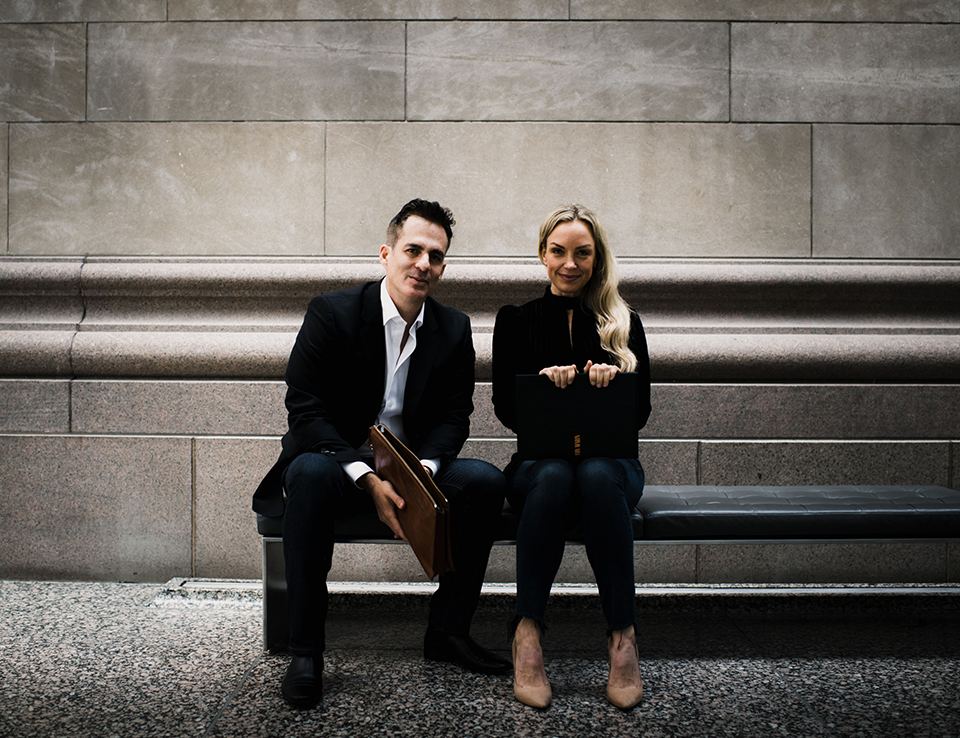
Ralph Fox & Kori Marin
Kori and Ralph's love affair with Toronto Real Estate have spanned several decades! It is incredible to see how far their mad crazy passion for design, architecture and innovation has taken them, which is only the beginning of their bigger vision and relentless goal-setting! Kori and Ralph have created this forum for their readers to explore the good, the bad, and the sometimes ugly real estate. An honest perspective about the ins & outs of the business - one in which they live, work and experience first hand every day. Nothing is more interesting than the "real" in real estate!